


Asking for a letter of recommendation can be one of the most stressful parts of applying for ophthalmology residency. The process can feel awkward and be anxiety-inducing. The pressure to secure a strong letter that distinguishes you only adds to the challenge.
In most instances, you will need three letters: two from ophthalmologists who can vouch for your dedication, clinical skills, and potential in the field and one from a nonophthalmology physician who can speak to your clinical acumen, often from a surgical or internal medicine rotation.
Although what makes a letter strong varies, certain strategies can help you get a recommendation that truly reflects your strengths. After speaking with multiple applicants and mentors, here is what I have learned about the process.
DEFINE YOUR GOALS
Before requesting a letter, think through why you are asking this specific individual:
- Did you actively participate in their clinic or surgeries?
- Do you feel they can write something personal and meaningful about you?
While delivering a presentation at an ophthalmology conference recently, I had the opportunity to meet Sravanthi Vegunta, MD, the associate residency program director of the John A. Moran Eye Center at the University of Utah in Salt Lake City. Dr. Vegunta provided valuable advice on how to approach asking for a letter of recommendation. She emphasized the importance of setting your goals ahead of time and being intentional with your request. “Programs already have your CV,” she said. “They don’t want to read a summary of it in the letter.”
As a clinician and program director, Dr. Vegunta understands how busy attendings can be. She suggested prompting them with specific examples such as, “Remember when I helped with XYZ?” This can help guide the content of the letter and make it more personal and meaningful. Ultimately, programs want a sense of your personality and what makes you unique.
ASSESS THE STRENGTH OF THE LETTER
Not all letters of recommendation are equal. You want one that speaks to your strengths, contributions, and potential as a resident. It is more beneficial to have a quality letter from someone who knows you well than a generic letter from a respected attending who does not know you well. You might ask, “Would you feel comfortable writing me a strong letter?” This gives the person an out if needed.
CONSIDER YOUR MENTORS
In addition to attendings with whom you rotate, mentors who have guided you over time can be excellent letter writers. If you have collaborated on research, attended conferences together, or had ongoing mentorship discussions, they can provide a broader perspective on your commitment to ophthalmology and your growth as a medical student.
If a mentor has played a significant role in your development, they may be an ideal person to write a letter of recommendation for you. For example, Sandra Johnson, MD, a professor of ophthalmology at the Macon Eye Institute at the University of Missouri School of Medicine in Columbia, became a key mentor to me during my first year of medical school (Figure). Although she had mostly seen me in the context of our research collaboration, her deep understanding of who I was made her an ideal person from whom to request a letter of recommendation. To give her more insight into my clinical skills, I arranged to shadow in her clinic during my free time between clerkships. Mentors like these are invaluable. Hold on to them.
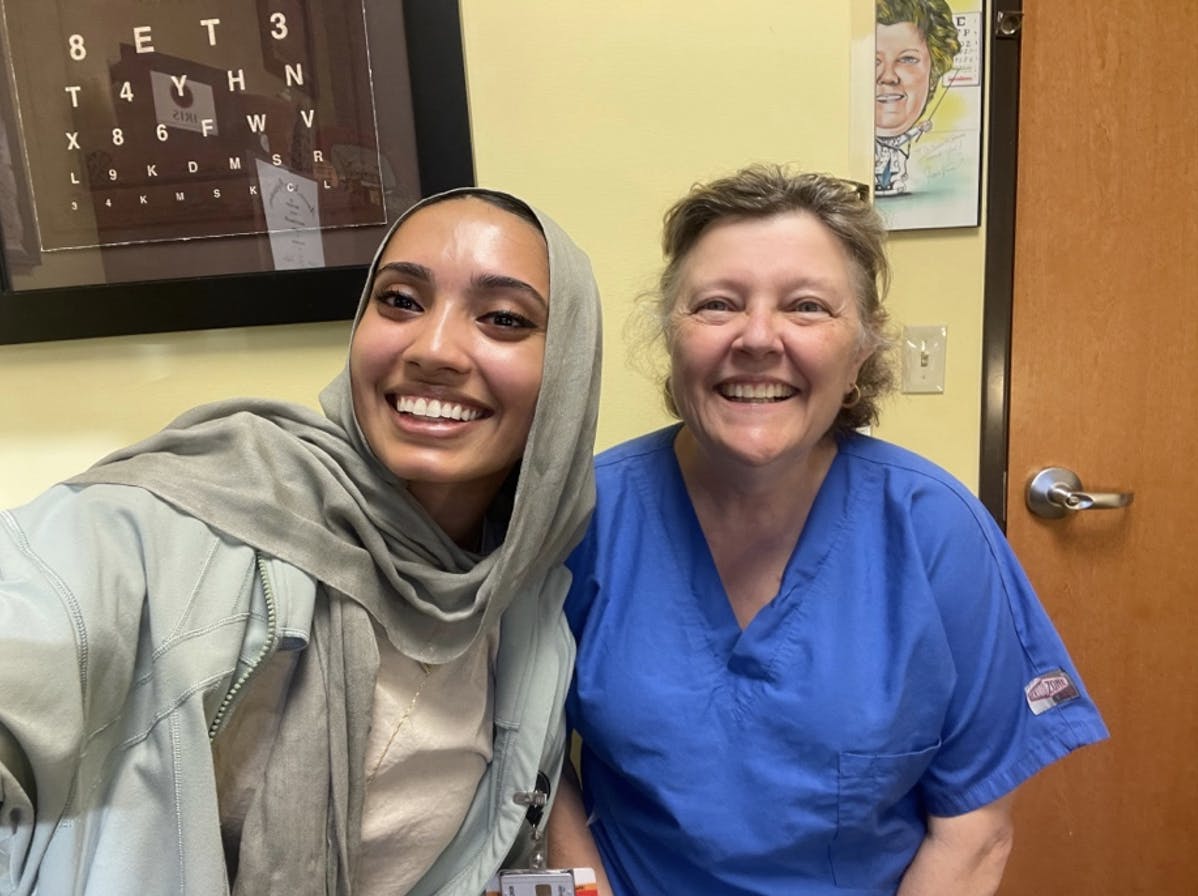
Figure. Anya Rahman, BS (left) and her mentor Sandra Johnson, MD.
THE ASK: TIMING AND FRAMING
When you request the letter, make it as easy as possible for the person to say yes. Following is a simple framework:
- No. 1: Make the request in person. If that is not possible, a well-crafted email can work, too.
- No. 2: Ask early. If you are starting a 4-week rotation, find out which attendings students recommend asking for letters and try to work closely with those surgeons. You can even ask the clerkship coordinators to schedule you to have more time with a specific attending. Let them know early on that you are hoping to earn a letter; this sets expectations and gives them time to evaluate you.
- No. 3: Be direct and professional. If you could not make your request early, it may not be too late. You could send an email at the end of your rotation that reads something like this: “Dr. X, I really enjoyed working with you during my rotation, and I learned a lot about ophthalmology and patient care. I was wondering if you would feel comfortable writing me a strong letter of recommendation for residency. I would be happy to provide any additional information that might be helpful.”
- No. 4: Offer support. Provide your CV, personal statement, and any specific points you would like them to highlight.
CONCLUSION
Asking for a letter of recommendation does not need to be daunting. By planning ahead and making the process easy for your attendings, you can secure meaningful, personalized letters that strengthen your application. Most faculty understand how important these letters are and are happy to help—especially if you have shown dedication and enthusiasm during your time with them.