

Ophthalmology is a specialty that often flies under the radar for medical students. For most of us, it is a short interlude in a larger neurology block during preclinical years, but the field is far richer than many curricula suggest. As a second-year medical student increasingly drawn to ophthalmology, I quickly realized that, if I wanted to gauge whether the specialty was a good fit for me, I would have to venture beyond the standard exposure my peers and I were expected to receive.
If, like me, you want to learn more about the field, the good news is that you do not need a background in eye exams, prior research, or even a home program to start. All that is required is a spark of interest and a willingness to put yourself out there.
For those who are considering ophthalmology, this article shares the approaches and resources that helped me explore the specialty long before starting clerkships.
GET STARTED
First, it helps to familiarize yourself with what the field can entail. In addition to comprehensive ophthalmology, there are various subspecialties to consider, including: cornea and external diseases, glaucoma, retina, neuro-ophthalmology, pediatric ophthalmology, uveitis, and oculoplastics.
Because of the multifaceted nature of ophthalmology, one of the most beneficial things I did before I shadowed my first ophthalmologist was to spend a considerable amount of time exploring aspects of the specialty online without any specific goals. I went from watching random videos of cataract procedures on Eyetube to watching day-in-the-life videos on YouTube. My goal was to form a first impression that could be challenged or confirmed by what I later saw in practice.
Developing a basic sense of the different aspects of ophthalmology will make your future experiences in the field more meaningful and provide you with context to build on as you continue to learn.
SHADOW AN OPHTHALMOLOGIST
Shadowing is the bread and butter of medical specialty exploration. The first time I shadowed an ophthalmologist, I was struck by how much I could learn simply by watching. I was amazed at how confidently they could diagnose conditions based almost entirely on a physical exam. It was then that I realized just how much beauty and nuance there is in examining an eye.
If your medical school has a home ophthalmology program, reach out early to see whether you may spend a day shadowing someone in the department. Even a cold email can get your foot in the door; many physicians in ophthalmology and other departments are delighted to have enthusiastic medical students shadow them and learn about their specialty.
If your school lacks an in-house program, there are other ways to gain exposure. Private practices and community ophthalmology clinics are often willing to offer shadowing opportunities. These practices may not have a regular schedule of rotating medical students and thus may be flexible about you joining them for the day.
Vary your experiences as much as possible. Shadowing multiple ophthalmologists in different subspecialties can provide you with a fuller picture of what the field has to offer. For example, an OR day with an oculoplastics attending might be a completely different experience than a clinic day with a glaucoma specialist.
TAKE ADVANTAGE OF ONLINE RESOURCES
To get the most out of your in-person experiences, build your knowledge base. Ophthalmology is a specialty with a plethora of high-quality learning resources available for free (see Some of My Favorite Resources).
SOME OF MY FAVORITE RESOURCES
AnkiHub
Anki users can add this free, comprehensive ophthalmology deck to their routine. When I encounter new topics while shadowing an ophthalmologist or elsewhere, this resource helps me to retain that learning, which will be helpful when clerkships start.
EyesForEars
While many of this podcast’s episodes are geared toward those further along their medical training, it’s always fun to listen to when you have some down time. It can be a great resource for a learning more about certain ocular pathologies or ophthalmology as a field while on the go.
EyeGuru
After making an account, users can watch this entire lecture series, which runs through many of the top subjects in ophthalmology. Users can also practice reading images, including OCT scans and fundus photographs.
Eyetube
This website offers a host of surgical and educational videos spanning the breadth of ophthalmology. The video library is organized by subspecialty or topic and powered by user-generated content.
EyeRounds
This website from the University of Iowa Department of Ophthalmology and Visual Sciences hosts a massive collection of cases, videos, and images of ocular diseases and pathologies.
EyeWiki
This resource from the AAO has helped me learn about ophthalmic diseases or topics of interest in great depth.
Neuro-Ophthalmology With Dr. Andrew G. Lee
Dr. Lee is an excellent teacher of neuro-ophthalmology, and his YouTube channel is my go-to resource for understanding the intricacies of various neuro-ophthalmologic diseases. Short-form videos provide both quick refreshers and in-depth explanations of various concepts.
OphthoBook
This excellent introduction to the basics of ophthalmology caters to medical students. It is easy to understand and was essential for building my knowledge of the field.
ENGAGE IN RESEARCH
Even if you do not see research playing a major part in your career journey; seeing a project or study to completion is an effective way to immerse yourself in a specific topic within ophthalmology and demonstrate a commitment to the field. Treat research as an opportunity to explore specific aspects of the field that interest you rather than an esoteric line on your curriculum vitae.
If your school has research faculty, contact someone whose previous work interests you and inquire about opportunities to become involved.
If you do not have a home department, consider an interdisciplinary approach to delving into eye diseases. You might be able to bring an ophthalmologic spin to another field of research (Table).
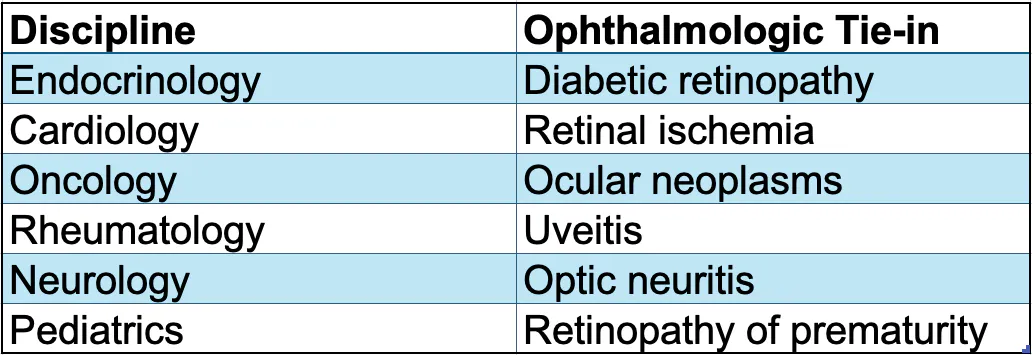
Table. Ideas for Interdisciplinary Research
Further, presenting research at ophthalmology conferences is a practical way to build connections. It gives you the chance to meet attendings in the field and connect with other medical students and residents who can relate to the experience of choosing a specialty. Being in those rooms and hearing physicians talk honestly about their career paths and what practicing ophthalmology is really like can make the field seem more tangible and remind you why you are pursuing it in the first place.
GRAND ROUNDS
One of my favorite events is my institution’s weekly grand rounds. When I first began attending, I understood maybe 10% of what was said during those meetings and left with pages of words and phrases that I was excited to look up afterward. Listening to faculty present and discuss cases provides a glimpse into how medicine is practiced and deliberated by experts in the field.
FINAL THOUGHTS
As a second-year medical student exploring ophthalmology, I have learned that the path into this specialty is neither linear nor standardized.
Use your free time to explore specialties that pique your interest, especially the ones you have heard of but have no idea what they entail. That exploration could reveal a new interest and help map your future career as a physician.