

A 2022 study reported that ophthalmology has the fewest number of minority residents of any medical specialty and that only 7.2% of US ophthalmologists identify as underrepresented in medicine (URiM).1 This study was cited in a 2023 YMDC Bookmarked article titled “Representation in Ophthalmology.” In this article, neuro-ophthalmologist Ore-Ofe O. Adesina, MD, of UT Health Houston, referenced two programs that are working to recruit more minority students into ophthalmology: the Minority Ophthalmology Mentoring program and the Rabb-Venable Excellence in Ophthalmology Research Program.
These initiatives provide URiM students with the opportunity to network, present research, succeed on exams, and much more. As a participant of both programs, I hope to shed light on my experience and encourage other URiM students to participate.
Minority Ophthalmology Mentoring Program
As a partnership between the AAO and the Association of University Professors of Ophthalmology (AUPO), the Minority Ophthalmology Mentoring program aims to help URiM students become competitive ophthalmology residency applicants. The program recruits individuals during their first year of medical school. Accepted applicants (mentees) are paired with a URiM ophthalmology mentor for one-on-one guidance. Mentees participate in virtual webinars on various topics, such as research opportunities, USMLE exam preparation, residency application planning, and mock interviews. In their first year of the program, mentees also attend the Student Engagement Weekend at the AAO Annual Meeting. The structure of the program and the continuous support from mentors and program coordinators led 27 mentees to successfully match into ophthalmology residencies in the 2024 match cycle.
My experience with the Minority Ophthalmology Mentoring program began when I was accepted into the class of 2021 cohort. The late summer and early fall consisted of several Zoom programs introducing new mentees to the program and discussing with us the state of diversity in ophthalmology. Once I was paired with my mentor, a retina specialist in Chicago, we had monthly meetings that spanned a range of topics, from upcoming exams to research projects to imposter syndrome. In 2021, I attended my first Student Engagement Weekend at the AAO Annual Meeting in New Orleans. In 2022, I returned to the AAO Annual Meeting in Chicago for a special Student Engagement Weekend for returning mentees. Each Student Engagement Weekend experience has strengthened my love for this field and has solidified my interest in a career in ophthalmology.
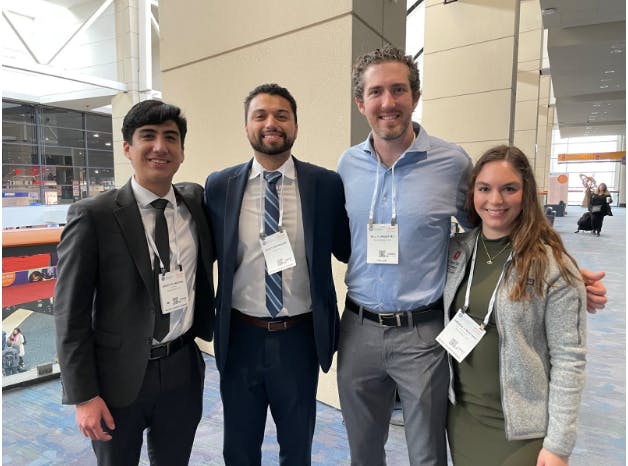
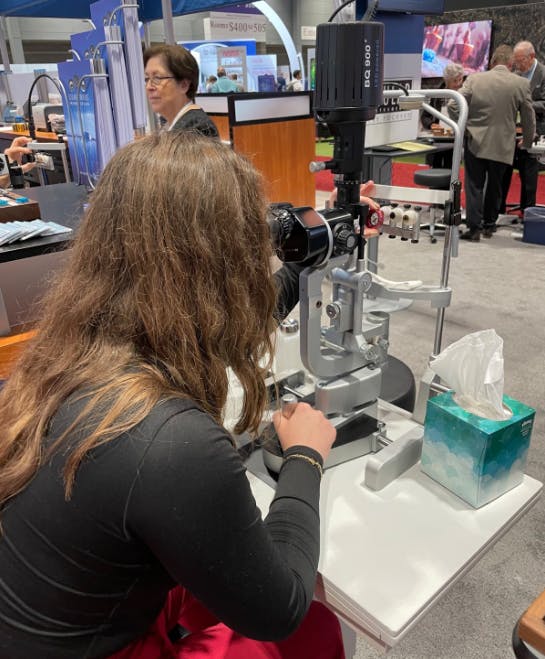
Highlights of some Student Engagement Weekend experiences.
Rabb-Venable Excellence in Ophthalmology Research Program
The National Medical Association’s Rabb-Venable Excellence in Ophthalmology Research Program supports underrepresented medical students, residents, and fellows who are committed to research discoveries and to serving underserved communities. Participants attend weekly virtual programs during the summer to prepare for research presentations, plan for residency applications and interviews, and learn about diversity in ophthalmology.
Participants are invited to attend the annual National Medical Association’s Ophthalmology Section meeting to present their research. They also attend premeeting lectures and workshops to learn about ophthalmology residency applications, review how NEI funding works, network with mentors, and enhance their public speaking and interview skills. After the meeting, participants are invited to attend virtual fireside chats, which are sessions with US program directors designed to help applicants identify which programs are best fit for them.
My experience with the Rabb-Venable Excellence in Ophthalmology Research Program began in summer 2022. Shortly after my acceptance, I began the weekly virtual programming. I attended panels hosted by Rabb-Venable faculty and alumni, residency application workshops, virtual interview workshops, and research presentations by fellow Rabb-Venable participants. At the end of July, I traveled to New Orleans to attend the National Medical Association Ophthalmology Section meeting. Through this experience, I gained valuable knowledge from mentors who shared their contributions to ophthalmic research and education, and I reconnected with mentors and friends that I’ve encountered throughout my journey in ophthalmology.
Conclusion
Building a network of supportive mentors and friends is a key to success in any profession. I am grateful to the Minority Ophthalmology Mentorship and Rabb-Venable programs for introducing me to people who have served as essential figures in my development as an ophthalmologist. I look forward to returning to future meetings to keep up with our progress in the field and to support the next generation of budding ophthalmologists.
1. Atkuru A, Lieng MK, Emami-Naeini P. Trends in racial diversity among United States ophthalmology residents. Ophthalmology. 2022;129(8):957-959.