_1753895074.jpg)
Editorially independent content, supported with advertising from Lensar
July 2025
Innovation Journal Club explores recently published and presented data around innovations in eye care with a focus on how they might shape real-world practice.
I. Paul Singh, MD; Steven R. Sarkisian Jr, MD; Denise M. Visco, MD, MBA; and Darrell E. White, MD
In the Innovation Journal Club (IJC) series on Eyetube.net, host I. Paul Singh, MD, of The Eye Centers of Racine & Kenosha in Wisconsin, interviews leading experts from across eye care subspecialties about emerging innovations and technologies that may prove influential to the real-world practice of ophthalmology. The series is editorially independent (supported by advertising from multiple companies), which allows the discussions to be broad in scope and candid in presentation.
The following is a summary of three episodes in which Dr. Singh spoke with Steven R. Sarkisian Jr., MD, about the role of procedural pharmaceuticals in glaucoma management; Denise M. Visco, MD, MBA, about the stability of femtosecond arcuate incisions; and Darrell E. White, MD, about the elusive goal of achieving work-life balance.
The advent of procedural pharmaceuticals, which help alleviate the burden of self-administration of topical medications, is poised to continue the ascendancy of a glaucoma treatment paradigm in which drop therapy is used adjunctively, Dr. Sarkisian predicted in a recent episode of Innovation Journal Club.
In his own practice, Dr. Sarkisian said he has largely moved away from offering topical therapy as the de facto first-line option in managing glaucoma. Instead, he prefers to start with selective laser trabeculoplasty (SLT), with procedural pharmaceuticals offered as a second line.
“If you look at what my OR schedule looks like now compared to what it looked like a year ago, it's totally different,” Dr. Sarkisian said, adding that while he is doing phacoemulsification and implanting premium IOLs on a regular basis, his glaucoma procedures mostly include standalone MIGS with or without a procedural pharmaceutical. “I’m opening up new OR days just to accommodate doing that,” he said.
One of the concerns regarding procedural pharmaceuticals is their ability to effect long-term control of glaucoma. However, Dr. Sarkisian said, there is mounting evidence that implants remain effective for longer durations than studied in pivotal trials. For example, he discussed a retrospective, single-site study that evaluated the IOP-lowering efficacy and safety of a single intracameral 10-µg bimatoprost implant (Durysta, Allergan, an AbbVie Company) in 197 eyes among patients followed for 12 months or longer.1 Eligible patients included those with open-angle glaucoma or ocular hypertension who received the implant in one or both eyes in routine clinical practice. Study endpoints included IOP, IOP-lowering medication and procedure use, and safety outcomes (Figure).
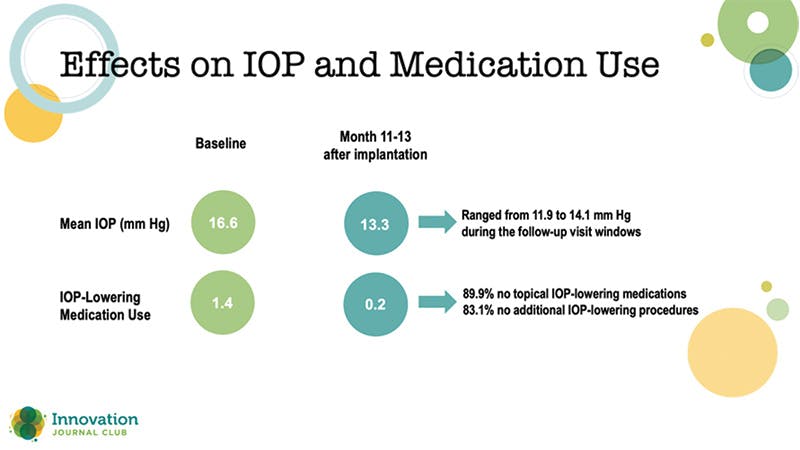
Figure 1. Comparisons in procedural counts in 2021 and 2022 in an analysis of national claims data from a 5% sample of all Medicare beneficiaries.
As for safety, the study findings demonstrated that no eye required an implant removal, and there were no cases of treatment-emergent corneal edema after bimatoprost implant administration. It was noted that three eyes (three patients) had uncontrolled IOP with the bimatoprost implant, SLT, and topical medications.
“[These data] are significant,” Dr. Sarkisian said. “If you give someone with ocular surface disease a year off from eyedrops, what happens? Their goblet cells rejuvenate, their stem cells are enriched, and everything sort of becomes healthier. Then, maybe they can be reintroduced to topical medicine, or better yet, if the patient notices a significant improvement in their symptoms off drops, repeat SLT or move on to another procedural pharmaceutical or stand-alone MIGS.”
1. Teymoorian S, Craven ER, Nguyen L, et al. Real-world study of the effectiveness and safety of intracameral bimatoprost implant in a clinical setting in the United States. Clin Ophthalmol. 2024;18:187-199. Published 2024 Jan 19. doi:10.2147/OPTH.S445005
In an episode of the Innovation Journal Club, Denise M. Visco, MD, MBA, shared insights into the evolving role of femtosecond laser arcuate incisions in astigmatism correction during cataract surgery.
Dr. Visco emphasized the benefits of using beveled arcuate incisions created by the ALLY laser (LENSAR), which differ from traditional corneal-plane incisions and which she believes offer enhanced stability. “Our data show that when paired with a reliable nomogram, the results remain stable, even at 24 to 36 months postop,” she noted, referencing her multi-year studies.1 This long-term efficacy, she said, dispels concerns about regression in visual outcomes.
One standout feature of the LENSAR system is its iris registration capability. By aligning laser treatments with topographic data rather than relying on manual or limbal vessel markings, the system ensures highly accurate incision placement. Dr. Visco stressed the importance of consistency: “If you’re going to make a nomogram that consistently delivers the same result, then formation and placement of the incision are critical.”

She also addressed a common mistake among surgeons—deliberately leaving incisions unopened to “titrate” results. “You can’t titrate these. The incision either is or it isn’t. If you’re unsure of the outcome, you should reevaluate your treatment plan,” she advised.
During the episode, Dr. Visco shared data from a retrospective chart review of 22 patients who had undergone femtosecond laser arcuate keratotomy for astigmatism correction using the ALLY laser. The study sought to evaluate the long-term stability of the laser’s astigmatism correction by comparing postoperative data at 4 to 6 weeks and at 24 to 36 months.1 According to Dr. Visco, the study validated the stability of the incisions (Figure 1). Refractive outcomes are shown in Figure 2.
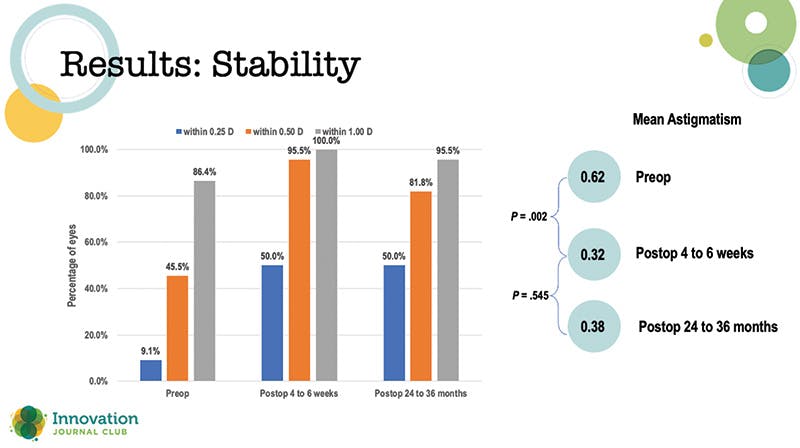
Figure 1. A retrospective chart review of 22 patients found that arcuate incisions created at the time of cataract surgery with the Lensar ALLY laser were stable when outcomes were examined at 4 to 6 weeks postoperatively and again at 24 to 36 months postoperatively.
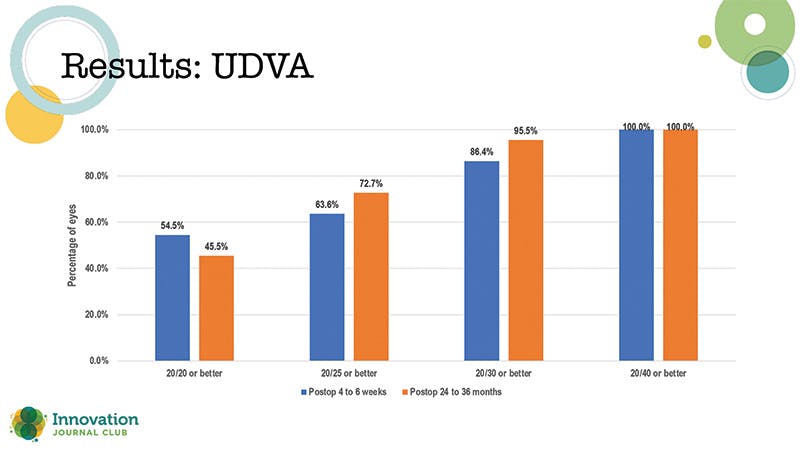
Figure 2. Refractive outcomes at 4 to 6 weeks postoperatively and at 24 to 36 months postoperatively from Dr. Visco's retrospective chart review.
In conclusion, Dr. Visco encouraged surgeons to track their own data closely. “You can’t improve outcomes without knowing where you’re starting from,” she said. Her message was one of optimism grounded in science—precision tools, when correctly applied, yield reliably excellent results.
1. Visco DM. Long-term Stability of arcuate incisions created with a novel, dual pulse femtosecond laser system for astigmatism management. Presented at: American Society of Cataract and Refractive Surgery. April 25-28, 2025; Los Angeles.
In a special edition of the Innovation Journal Club, Dr. Singh sat down with Darrell E. White, MD, for a deeply personal and wide-ranging conversation on work-life balance, emotional wellbeing, and the journey to health. Rather than diving into clinical data or podium presentations, the two seasoned ophthalmologists explored a concept that resonates far beyond medicine—harmony.
Dr. White shared wisdom gleaned from a heartfelt conversation with his daughter, a behavioral therapist, who reframed the elusive goal of “work-life balance” as “harmony.” Rather than drawing strict boundaries between work and life, she suggested viewing them as interconnected components that must work in concert. Inspired, Dr. White developed a presentation around this idea, using the metaphor of a musical composition or a cascading fountain to illustrate the balance of life’s many elements.
“You can have everything,” Dr. White explained, “but you have to define what ‘everything’ means to you. And even then, you can’t have everything all the time.” This flexible, self-defined framework offers a healthier alternative to the unrealistic pursuit of daily balance. Some weeks may demand more from one’s professional life, while others may lean into family or personal passions.
Dr. Singh, who has undergone his own health transformation following bypass surgery, echoed this sentiment. He emphasized the importance of embracing one's full identity—including passions like music—which can enrich professional life rather than detract from it. “I realized I can’t be who I am if I don’t bring that music into what I do,” he said.
The discussion underscored the critical need for proactive health awareness. Dr. White cautioned that even seemingly healthy individuals may harbor hidden risks. He encouraged intentional self-assessment and prevention, noting that emotional and physical well-being are deeply intertwined.

For both physicians, creative outlets—writing for Dr. White, music for Dr. Singh—have become essential for processing thoughts and maintaining mental clarity. They advocated for professionals to integrate these passions into their lives as part of a broader personal harmony.
Ultimately, the conversation was a call to redefine success, not as a relentless pursuit of doing everything at once, but as a mindful curation of what truly matters, lived in rhythm with one’s own values and wellbeing.