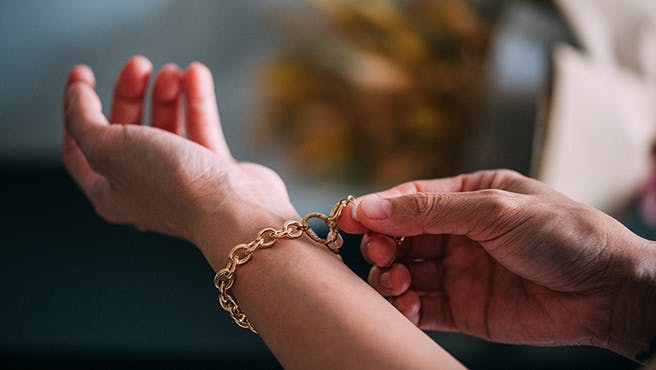


Our professional relationships require attention and care, much like anything in our lives we deem to be important. For me, it is rare I step foot out of my home without wearing jewelry. I always handle my pieces with the utmost care and return them safely to my jewelry box every night. Funny as it may sound, I find that I follow this same philosophy when forming connections in ophthalmology.
As you have likely heard and will continue to hear throughout your professional journey, ophthalmology is a small field, and interpersonal relationships hold high value. Fortunately, medical schools are a hub for mentors of all career stages (Figure 1). Medical students are constantly exposed to potential mentors through lectures, small groups, specialty interest group meetings, research projects, school-assigned advisors, and medical conferences—and this is not even an exhaustive list! If and once you identify someone as a potential mentor, a careful approach to cultivating and maintaining that relationship can lead to a meaningful and lasting connection.
_1714399983.jpg?auto=compress,format)
Figure 1. Sneha Gajarla, BS, (left) pictured with peer mentor Sruti Rachapudi, BS, MBA.
MAKE AN ACTIVE EFFORT
I met Andrew G. Lee, MD, one of my specialty mentors, as a first-year medical student through my school’s ophthalmology student organization (Figure 2). When I heard about his journey, I realized his career aspirations and goals aligned with mine. It was also very evident that he was genuinely open to mentorship as well. I instantly decided I would take it upon myself to reach out to him. I approached our first meeting prepared with an introduction of myself and of my intentions and goals for his mentorship. I also came ready to listen to Dr. Lee’s expectations as a potential mentor. It was my active effort and preparation that helped create our working mentorship.

Figure 2. Gajarla (center) pictured with practicing mentor Andrew G. Lee, MD (left).
SHOW GRATITUDE
Expressing your intentions as a mentee is key, but I believe it is also considerate to express gratitude for your mentor’s time and assistance. Mentors are not compensated for their time or guidance, but rather it is something they choose to spend time on out of a genuine desire to see others succeed. I recently met with my advisor, Sarah Samreen, MD, who was initially my small group facilitator. She has been my mentor for 3 years now, and to this day I make it a point to thank her for advocating for me as a medical student and future ophthalmology applicant. However, our most recent meeting stood out to me, because she took the opportunity to open up to me and be vulnerable about her own career journey. I was sincerely touched, and it opened my eyes to what a strong relationship I was able to cultivate with her.
FOLLOW UP
My relationships with Drs. Lee and Samreen could not have been possible without my effort to follow up with them. Having now been on the receiving end of this as a mentor, I realize how meaningful it is when a mentee takes the time to follow up on our discussions. It is a thoughtful gesture and shows that you care. In the end, regular check-ins will contribute to the quality and longevity of your mentor relationships.
CONCLUSION
Think of your academic journey as your own unique silver chain. This chain is composed of many small links, and these links are fragile and must be tended to with care. Similarly, the relationships you form as you progress through academia and beyond require active effort—treat the links in your chain with respect and kindness, as they will help you build on your accomplishments. Your relationships can serve as a valuable accessory to your career, but it is your job to protect them. As you continue your journey as an aspiring ophthalmologist, prioritize care for the relationships you cultivate along the way.