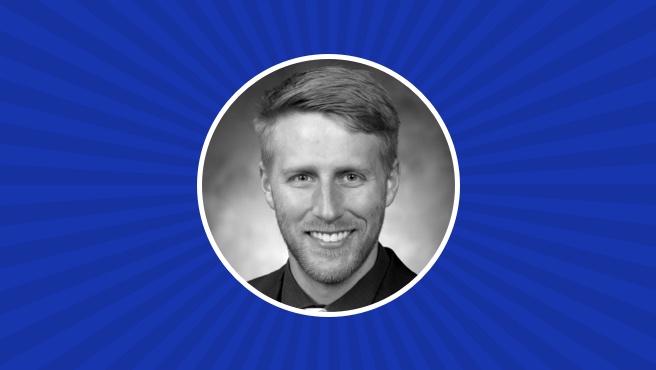



Dr. Libfraind is a refractive, cataract, and anterior segment surgeon at Parkhurst NuVision in San Antonio.
Please share with us your background.
I grew up in central New Jersey and am the oldest of three girls. I had early exposure to medicine, as both of my parents are physicians. Although they encouraged me to pursue my own interests, I ultimately followed in their footsteps, and I felt fortunate to have a great support system. My grandfather, with whom I was very close, was a Holocaust survivor, and his experience gave me perspective on the hardships that others face. I wanted to pursue a career in which I could have a positive impact on people’s lives.
Sports have been a big part of my life. In high school, I joined the crew team, and it turned out to be one of my most impactful decisions. During those years, I had the privilege of training and racing alongside a dedicated group of teammates who shared my passion for the demanding sport. I continued rowing in college at Brown University, where our crew team won two NCAA national championships. Rowing taught me the value of teamwork, self-confidence, and perseverance—lessons that have stayed with me long after my time on the water.
After college, I worked as a research fellow at the National Institutes of Health. I then completed medical school at Thomas Jefferson University in Philadelphia and went on to ophthalmology residency at the University of Buffalo in New York. From there, I traveled south to San Antonio, Texas, where I completed a high-volume private practice fellowship in anterior segment and refractive surgery at Parkhurst NuVision, through the Refractive Surgery Alliance (RSA) fellowship program and the World College of Refractive Surgery and Visual Sciences.
What drew you to ophthalmology and, specifically, to your field of interest?
Heading into medical school, I tried to keep an open mind about what specialty to pursue. Although I was most familiar with OB-GYN and radiology (my parents’ specialties), I was curious about ophthalmology. I spent time shadowing the residents in the emergency department of Wills Eye Hospital in Philadelphia and was fascinated with the pathology that I saw. I was intrigued by the complexity of the eye and its relationship to the rest of the body.
When I started my clinical rotations, I discovered that I enjoy surgery. Ophthalmology seemed to provide a good balance of interesting clinical work and the ability to work with my hands in the OR. I spent time during my third year doing research and working in a clinic with an excellent pediatric ophthalmologist, Jing Jin, MD, which solidified my interest in the specialty.
During my residency, determining my post-graduation path was a process that unfolded over time. While I enjoyed learning about the various fields within ophthalmology, there wasn’t one subspecialty that stood out from the others. It was not until I began performing cataract surgery that I discovered I had a passion for it. I found it rewarding to see an immediate positive impact on my patient’s vision. Helping patients achieve visual satisfaction and improve their quality of life is what interested me the most.
Some of my senior residents had pursued private practice fellowships in previous years, which led me to investigate this option. Like most residents, I had very little exposure to cornea or lens-based refractive surgery. While we learned how to perform cataract surgery, we did not often have access to advanced lenses. I felt that I would benefit from additional training and experience so that I could confidently offer the latest technologies to my patients and truly excel as a cataract and refractive surgeon.
It turned out that there was more to learn than I had initially anticipated, and fellowship gave me new passion and enthusiasm within ophthalmology.
Please describe your current position.
I am currently a refractive, cataract, and anterior segment surgeon at Parkhurst NuVision in San Antonio. After completing my fellowship, I decided to stay on as an associate. Our practice focuses almost exclusively on refractive surgery, and we offer the full spectrum of refractive surgery services, including cataract surgery, lens replacement, ICL, LASIK, SMILE, and PRK. Our focus is delivering an exceptional patient experience and achieving excellent surgical results.
I continue to engage in research, participating in clinical trials and pursuing my own projects. I enjoy this aspect of my work as it allows me to contribute to the growth of this field. Doing so also keeps me up to date on the latest technology and advancements, allowing me to offer my patients the best options for their unique visual needs.
In my role, I also enjoy mentoring new fellows who join our team and helping them develop into skilled refractive surgeons. It’s an exciting time to be a part of this growing field. Refractive surgery is becoming its own ophthalmic specialty, and there is now a focus on ensuring standards and quality of training through accreditation with board certification from the World College of Refractive Surgery and Visual Sciences.
Who are your mentors?
The most influential mentor in my career has been Greg Parkhurst, MD, FACS. Under his guidance, I have evolved from a novice surgeon with limited experience to a high-volume surgeon, performing nearly 3,000 cataract and refractive procedures within the first year of fellowship. Beyond surgical technique, he taught me the importance of clear and empathetic communication with patients. The practice he built is a model for success, and I have not only gained skills as a refractive surgeon and clinician, but gleaned insights into the dynamics of a successful private practice.
Another key mentor during my fellowship was Brett Mueller, DO, PhD. Brett was by my side throughout the journey, providing support and guidance through challenging cases. His mentorship instilled in me the confidence that I needed to believe in my abilities and know that I truly belonged in this field.
Through the RSA Fellowship Network, I had the privilege of learning from both Guy Kezirian, MD, MBA, FACS, and Helen Wu, MD. I must thank them for developing a comprehensive curriculum on refractive surgery and exposing me to the global community and the leaders within this field. The network of mentors and peers I built through the RSA fellowship and Physician CEO program has been an invaluable asset to my professional growth.
In addition, I would like to mention other mentors who have been valuable to my career, such as Erin Wolff, MD, with whom I conducted research at the National Institutes of Health, and Dr. Jin, who welcomed me into her clinic, gave me research opportunities, and encouraged me to pursue ophthalmology.
Last, the most important mentors in my life have been my parents and my husband. My parents have been my strongest supporters and source of encouragement. My husband, who has been with me through the highs and lows of my medical career, gives me great advice and perspective.
What has been the most memorable experience of your career thus far?
In refractive surgery, we are fortunate to be in the business of making people happier by improving their vision. I have had many positive interactions with patients that have brought me joy, from witnessing patients experience vision beyond what they thought possible to hearing stories about how their new vision has impacted their lives.
One of my favorite experiences so far was the opportunity to participate in a cataract mission trip to Mexico during my fellowship. Many of the patients we treated had been living with blindness for years, and some had traveled hundreds of miles to undergo surgery. It was an incredibly humbling experience and a reminder that we should not take for granted our abilities to help people in whatever capacity possible.
What are some new technological advances that you have found particularly exciting? Which advances in the pipeline are you most enthusiastic or curious about?
I am excited about several upcoming advancements in our field, including the latest developments in epithelium-on corneal cross-linking (epi-on CXL) for managing keratoconus and the Elios procedure (Elios Vision) for reducing IOP in patients with glaucoma.
Many protocols have been created to try to improve the epithelium-off (epi-off) Dresden protocol, the gold standard for CXL. I am eager to see the final data on some of the epi-on CXL treatments that are now in the pipeline. If these treatments prove as effective as epi-off treatments, it could be a significant advantage to patients, making CXL more efficient and comfortable and potentially reducing the risk of haze and infection.
The Elios minimally invasive glaucoma procedure leverages the precision of excimer laser technology to create a trabeculostomy while minimizing damage to surrounding tissue and reducing inflammation. I am an advocate for addressing glaucoma earlier in the disease course by combining MIGS procedures with cataract surgery, and I’m particularly excited about this promising technology.
Last, AI is a hot topic today, and I am excited to see how it advances our field, especially in the area of diagnostics. From predicting ectasia risk to optimizing ICL sizing, I think AI will play a large role in refractive surgery.
What is the focus of some of your research?
My research interests are in cataract and refractive surgery. Along with participating in several clinical trials, I am currently conducting an investigator-initiated trial of patients who were previous multifocal contact lens wearers to assess their satisfaction and outcomes with the Clareon Vivity IOL (Alcon). Another research project that I am completing is a retrospective study comparing outcomes between two presbyopia-correcting lenses in patients who underwent refractive lens exchange.
What is a typical day in your life? What keeps you busy, fulfilled, and passionate?
My workdays are split between surgery and clinic. I am in the OR or LASIK suite 4 half-days per week, and the rest of the time I am seeing patients in clinic. This schedule affords me the opportunity to balance my work with meaningful patient interactions and surgery.
After work, I look forward to spending quality time with my husband. Despite the usually scorching Texas weather, I make an effort to spend some time outdoors in the sun. I typically work out, which currently involves cycling on my Peloton and practicing yoga. Staying active is essential for my physical and mental well-being. In the evening, I relax or catch up on any pending work or projects.
Maintaining balance between ophthalmology and life outside of work is important. I feel fortunate to have loving family and friends in my life and a career that I find fulfilling.
What advice can you offer to individuals who are just now choosing their career paths after finishing residency or fellowship?
Find something you are good at and learn to become great at it. Be patient and don’t get discouraged if your path isn't perfectly obvious from day one. It takes time and experience to understand what fulfills you most. Being able to enjoy what you do every day is far more important than simply doing what is expected of you. Be flexible and understand that your own interests may change over time.
In addition, networking is important. Gaining insights from others and having the ability to uncover opportunities will help you reach your goals.
Tell us about an innovative procedure you are performing or a new imaging/diagnostic tool that has improved your practice.
We use the Insight 100 (ArcScan) for ICL sizing, which offers high-definition ultrasound imaging of the anterior chamber and allowing us to obtain precise measurements of the anatomy. We use this technology in conjunction with the ICL sizing nomogram developed by Dan Z. Reinstein, MD, MA(Cantab), FRCSC, DABO, FRCOphth, FEBO,to accurately predict the postoperative vault. We can also use the Insight 100 to assess ICL position after lens implantation, such as in cases of suspected lens tilt or rotation, to look at footplate positioning and the presence of possible ciliary body cysts. In addition, I have found this technology to be helpful for epithelial thickness mapping when assessing a patient’s candidacy for laser vision correction.