

The journey to ophthalmology practice is both rewarding and highly competitive. For medical students navigating the SF Match application, audition rotations, and interviews, gaining every possible advantage is key. As someone reapplying to the 2026 ophthalmology residency match, I have deeply appreciated the value of attending conferences.
Although certain application strategies, such as networking, may seem obvious to some candidates, for those without dedicated mentors or a home ophthalmology program, these insights may not be at the forefront. I fell into the latter group of applicants, wishing I'd prioritized conferences earlier, particularly student-friendly ones like YoungMD Connect (YMDC) Live.
My first YMDC Live experience in March 2025 reminded me how impactful these gatherings can be, offering invaluable experiences beyond traditional academics. I want to share my lessons and tips to help others—so, here's why making conferences a priority is a strategic move.
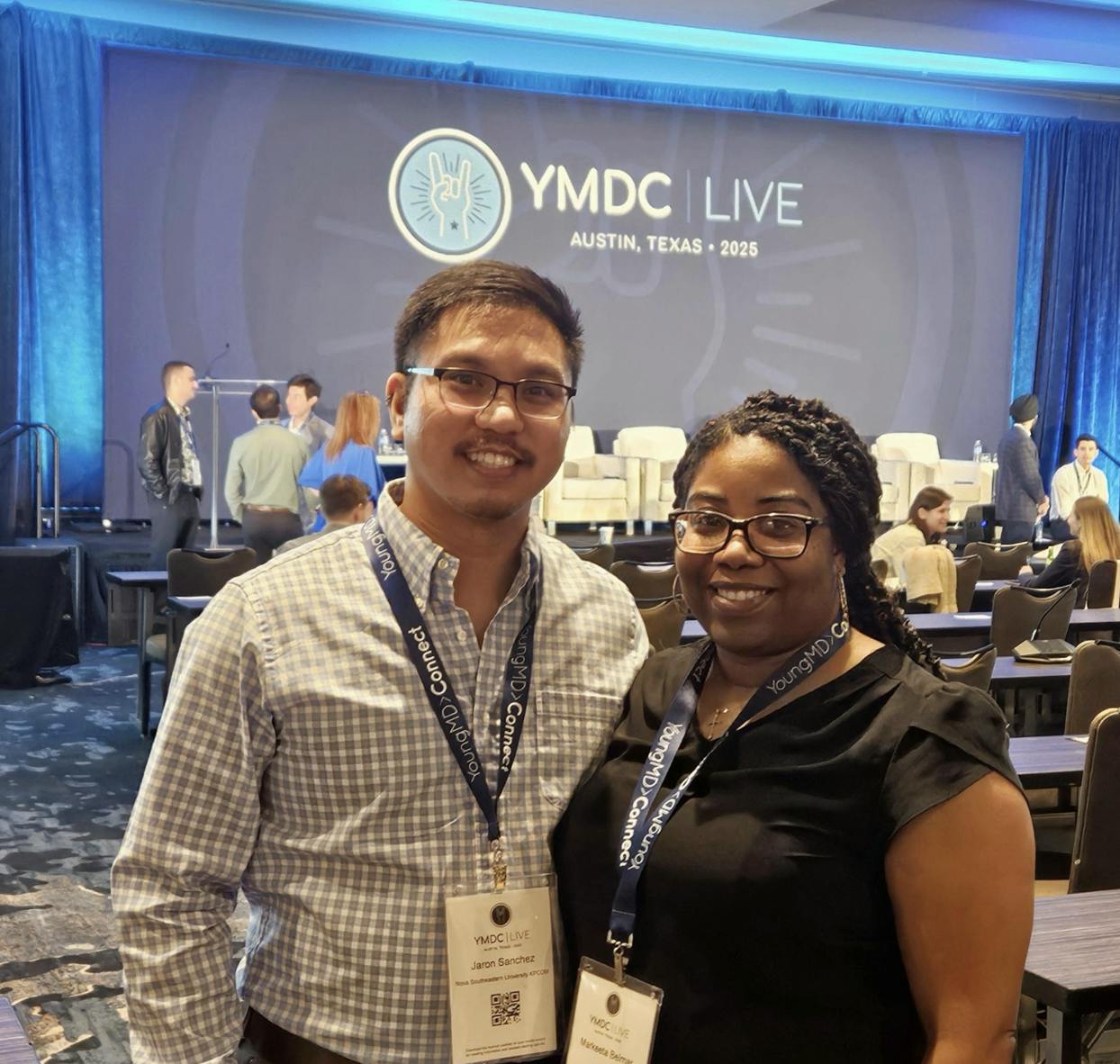
Figure. Jaron Sanchez, DO (left), and Markeeta Belmar, MPH (right), at YMDC Live 2025.
Networking for Impact: Building Meaningful Connections
Networking is a core benefit of attending conferences, opening doors to diverse perspectives from fellow students, reapplicants, residents, and attendings. You never know who might offer invaluable advice or the opportunity for future collaboration.
When it comes to networking, both the quantity and quality of the connections made are important. However, cultivating a few meaningful relationships is often more beneficial than briefly meeting a host of people. Connecting with people at varying stages of career is meaningful, too. Residents can share program insights, students can offer application experiences, and attendings can provide feedback or mentorship.
To forge these connections, be authentic and let your passion shine. Preparation also enriches interactions, so research the meeting’s speakers and plan questions. A key tip: Practice a concise, 1-minute "elevator pitch" to be memorable to those you meet. Finally, follow up promptly after the conference. The connections formed there may provide a vital support system for your journey.
Refining Your Narrative: Making Your Application Shine
As a reapplicant, personalized application feedback at YMDC Live was incredibly helpful. After a panel discussion on navigating the residency match, I was able to ask one of the panelists if he would review my application, and his feedback was incredibly insightful. He recommended highlighting my unique strengths more organically within my application and during interviews, rather than simply listing everything. For instance, he advised focusing on my 5 years of hospice volunteering or my "eye poetry" because simply listing these activities among the many others could dilute their impact. Given that most applicants have similar achievements, strategically showcasing your unique passions is key to standing out.
Conference connections offer a great opportunity for experienced eyes to review your application. This tailored guidance is gold, especially when post-interview feedback is limited.
Securing Strong Letters of Recommendation: The Mentor Advantage
Strong letters of recommendation are important for ophthalmology applications, with the SF Match requiring three, including at least one from an ophthalmologist and a preference for both clinical and research letters. For students without a home ophthalmology program, securing these letters can be challenging. Academic rotation letters might seem ideal, but a short rotation often prevents attendings from writing in-depth, personalized letters of recommendation. As the panelists at YMDC Live emphasized, the strongest letters of recommendation come from those individuals who know you well and can confidently speak to your skills and character, regardless of their practice setting.
This highlights the importance of early mentorship. Conferences are instrumental here, offering avenues to meet potential clinical and research mentors and identify opportunities for sustained interaction. This leads to those essential, strong letters that are based on demonstrated growth.
The Little Things Matter: Interview Preparation Insights
The interview trail demands attention to detail. The panelists at YMDC Live stressed that little things matter and highlighted the importance of a curated virtual interview background. Even a small effort demonstrates care. I experienced this firsthand when a Santa hat that was visible in my interview background sparked an organic conversation about family Christmas traditions; this showcased my personality outside of ophthalmology and helped me connect with the interviewer on a more personal level. Displaying something interesting and personal, even small, can initiate memorable interactions and help you leave a position impression. Such seemingly small pearls are precisely why attending conferences is so important, as they offer insights that can collectively have a big impact on your overall application.
Strategic Investment in Your Future
Attending conferences is a significant investment, so prioritize those that will benefit you the most. Fortunately, several conferences are student-friendly or offer dedicated programming for medical students interested in ophthalmology, including YMDC Live, Real World Ophthalmology (RWO), the Association for Research in Vision and Ophthalmology (ARVO), and the American Academy of Ophthalmology (AAO). Focusing on these meetings offers a high return on investment.
Ultimately, conferences are about proactively seeking opportunities to learn, connect, and grow. Whether you are looking to refine your application, find a mentor, gain interview tips, or network, the benefits are vast. My YMDC Live experience reinforced that these events can profoundly impact the journey to becoming an ophthalmologist. Don't underestimate the power of showing up, engaging, and making connections. It might just be the key to unlocking your next opportunity!