Editorially Independent Content supported by Alcon
October 2025
From coming out stories to career transitions, LGBTQ+ ophthalmologists reveal how visibility and community shape their lives—and the future of the field.
Vivienne Sinh Hau, MD, PhD; Alex Khammar, MD; Jessica Weinstein, MD; and David Ramirez, MD
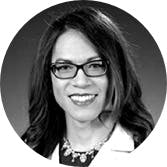
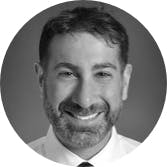
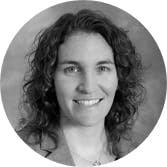
In honor of Pride Month, YoungMD Connect hosted an interactive, virtual panel featuring David Ramirez, MD; Alexander Khammar, MD, FAAP; Jessica Weinstein, MD; and Vivienne Hau, MD, PhD. This program focused on elevating LGBTQ+ representation and lived experiences within ophthalmology, as well as guidance for LGBTQ+ trainees and professionals in navigating their identity and career.
To begin the conversation, the expert panel discussed how their diverse career paths and LGBTQ+ identities enrich the ophthalmology profession.
Dr. Ramirez currently works as a pediatric ophthalmologist at Ann & Robert H. Lurie Children’s Hospital of Chicago. Having moved nearly every 4 years of his life, especially during medical school and residency, Dr. Ramirez said that geographic diversity shaped his perspective of how his identity as an openly gay man would be received.
Working as a Therapeutic Area Medical Director in Eye Care Clinical Development at AbbVie in Irvine, California, Dr. Khammar has also experienced living in many different places throughout his career. Following his fellowship in pediatric ophthalmology, Dr. Khammar’s career journey spanned from private practice and academic medicine to industry. As such, he offered insight into multiple work environments for LGBTQ+ professionals.
Dr. Weinstein is a uveitis & surgical retina specialist at Spokane Eye Clinic in Washington. While she grew up in Montreal, Dr. Weinstein has trained across the US in Miami, Louisianna, Seattle, and North Carolina. In addition to her surgical work, she also holds a teaching role at Washington State University medical school. Dr. Weinstein is known for her expertise in retina and uveitis and diverse clinical teaching experience.
Dr. Hau works as a vitreoretinal surgeon with Kaiser Permanente Riverside Medical Center in California. She is also on the faculty at Kaiser Permanente Bernard J. Tyson School of Medicine and California University of Science and Medicine and holds numerous leadership roles within the American Society of Retina Specialists and AAO. She directs the retina clinical trials program at Kaiser Permanente. She has been a passionate advocate for various LGBTQ+ and DEI/mentorship roles in professional societies.
Next, the panel shared their coming out stories with attendees. From more experienced to recent experts in the field, coming out at different stages in their professional careers reveals generational and personal preferences.
As a first-generation Vietnamese immigrant growing up in the 70s and 80s, Dr. Hau tried to suppress the feelings of gender dysphoria she had, not wanting to bring the complexity of coming out as transgender to her family during this time. She described the immense difficulty of growing up as transgender and being a medical student in the 2000’s because of the lack of society’s understanding of her identity labeling her as a disorder (DSM-III and IV pathologized it as Gender Identity Disorder). It wasn’t until 2013 when the next edition, DSM-V, definition was changed to gender dysphoria, explicitly stating that “gender non-conformity is not in itself a mental disorder.” that Dr. Hau felt a bit freer to explore her identity. However, the pivotal point in her transition journey did not come until she had her daughter. It was then when Dr. Hau realized she needed to live her life authentically, not only for herself, but for her daughter to know her as she truly was and as the best role-model she could be. Dr. Hau began her transition in her early 40s. She praised Kaiser Permanente for being such an inclusive employer and providing her the ability to practice ophthalmology as an openly transgender woman. She told attendees that since she has come out, she has received more leadership opportunities and respect from colleagues and patients and is now “living my best life today.”
For Dr. Weinstein, it wasn’t until medical school that she realized she was queer. After spending time dating both men and women, she realized she wanted to be with a woman long-term. In terms of how it impacted her career, Dr. Weinstein said that while she was not out on her application, she was more so by the time she was interviewing for programs. She described the often-difficult process of maintaining privacy during applications due to uncertainty about perceptions from fellow peers or mentors, but she swore that wherever she matched, she would make it work. Being an ophthalmologist was worth the uncertainty. Dr. Weinstein voiced that while unfortunately she has dealt with microaggressions, she has learned how to handle and overcome such situations.
From a young age, Dr. Ramirez knew he was gay. He came out to his family and friends at 16 and has been out ever since. While he completed his training just 2 years ago, Dr. Ramirez shared it is his steadfast belief that it’s important to do what you can to uplift your communities. Throughout his professional career, he was involved in numerous LGBTQ+ organizations, including inclusivity curriculum during training. However, despite being open about his identity since he was a teenager, Dr. Ramirez described instances during residency in Iowa where he was afraid to walk down the street as his true self due to differences in the political climate. It was with the support of his faculty mentors that he felt comfortable building this curriculum in residency and beyond. Through his various leadership positions, he continues to create safe spaces in ophthalmology for the queer community.
Dr. Khammar discussed how he first came out to a fellow student and friend during medical school in the 90s. He shared how, during residency, he was fortunate to have a gay co-resident, and they were able to support each other during those difficult years. Dr. Khammar explained it’s important to have representation of the LGBTQ+ community at all levels of training. He shared he believes his journey affected him as an ophthalmologist to know that sometimes people can see a bit of themselves in him and feel represented.
In a concluding discussion with attendees, the panel echoed the most valuable pearls taken from their own experiences.
In addition to YoungMD Connect, the panel discussed additional upcoming opportunities for attendees to learn or participate in inclusive professional environments. During the 2025 annual American Academy of Ophthalmology (AAO) meeting, attendees were able to:
Next year, AAO will be held in New Orleans from October 10th – October 12th.