

Editorially independent content, supported with advertising from Nordic Pharma, Glaukos, and Thea
February 2025
Innovation Journal Club explores recently published and presented data around innovations in eye care with a focus on how they might shape real-world practice.
I. Paul Singh, MD; Arsham Sheybani, MD; Brandon Ayres, MD; and Jason Bacharach, MD
In the Innovation Journal Club (IJC) series on Eyetube.net, host I. Paul Singh, MD, of The Eye Centers of Racine & Kenosha in Wisconsin, interviews leading experts from across eye care subspecialties about emerging innovations and technologies that may prove influential to the real-world practice of ophthalmology. The series is editorially independent (supported by advertising from multiple companies), which allows the discussions to be broad in scope and candid in presentation.
The following is a summary of three episodes in which Dr. Singh spoke with Arsham Sheybani, MD, about corneal endothelial health and MIGS procedures, Brandon Ayres, MD, about a novel crosslinked hyaluronate canalicular gel occlusive for dry eye disease (DED), and Jason Bacharach, MD, about the clinical impact of a preservative-free latanoprost formulation.
I. Paul Singh, MD
In a virtual episode, Dr. Sheybani discussed data comparing the corneal endothelial safety of three MIGS devices: iStent inject (Glaukos), Hydrus Microstent (Alcon), and CyPass Micro-Stent (Alcon).
In an analysis looking at 5-year data from the pivotal trials of each device, there was no significant difference in endothelial cell loss (ECL) among patients receiving an iStent inject at the time of phacoemulsification compared to phacoemulsification alone.1 Furthermore, the study on the Hydrus Microstent reported higher ECL in the device plus phacoemulsification group compared to phacoemulsification alone (control) in the first 3 months, but a rate of ECL that mirrored control after 3 months. The study authors reported that the highest ECL rate was in the 5-year data on the CyPass Micro-Stent, with accelerated loss after 2 years. For the study, clinically significant ECL was defined as >30% (Figure 1).
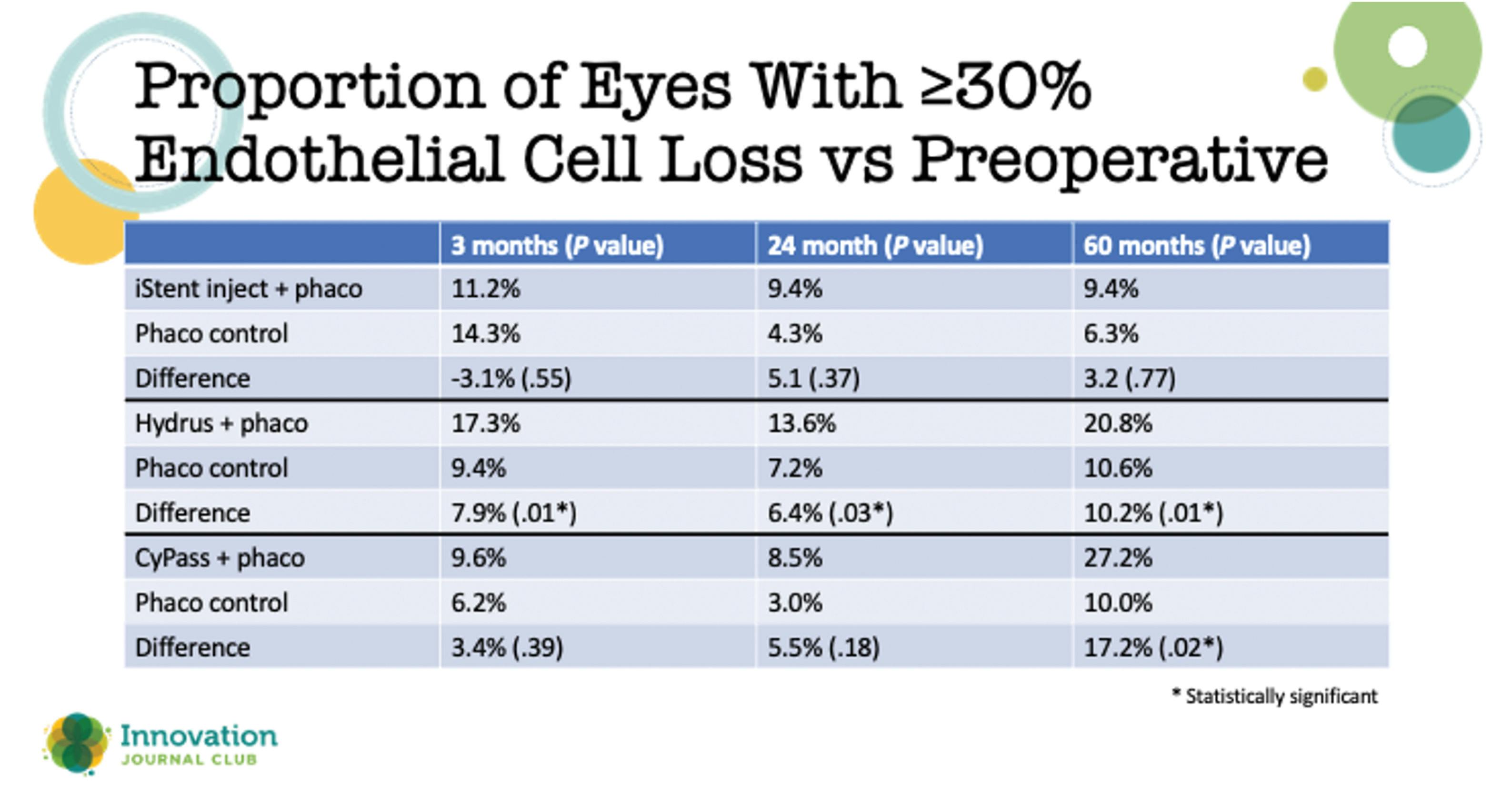
Figure 1. Recorded data of proportion of eyes with ≥30% endothelial cell loss versus preoperative.
“The whole purpose that we embarked on was to try to get a sense of what was the difference in not only total loss, but the rate of ECL over time of three different MIGS options that are implantable,” said Dr. Sheybani, who was a co-author on the analysis. “Whether it was the iStent inject study or the Hydrus study, patients didn't hit that 30% loss rate over 5 years. The CyPass group got close. It was in the high twenties, like 27%, but the key difference that you have to look at is what is the trend and what does that look like over time?”
The analysis also looked at data on endothelial cell density (ECD) reported in the devices’ respective pivotal trials. In the study on iStent inject, mean ECD was comparable at all time points between the iStent inject plus phacoemulsification group and the phacoemulsification only group. Meanwhile, the data on Hydrus Microstent indicated a significant initial reduction in mean ECD in the group of patients undergoing Hydrus Microstent and phacoemulsification surgery compared to phacoemulsification alone. But beyond the initial postoperative period, there was no difference in ECL rates compared to phacoemulsification alone. By comparison, there was a significant and progressive reduction in mean ECD among recipients of the Cy-Pass device after 2 years (Figure 2).
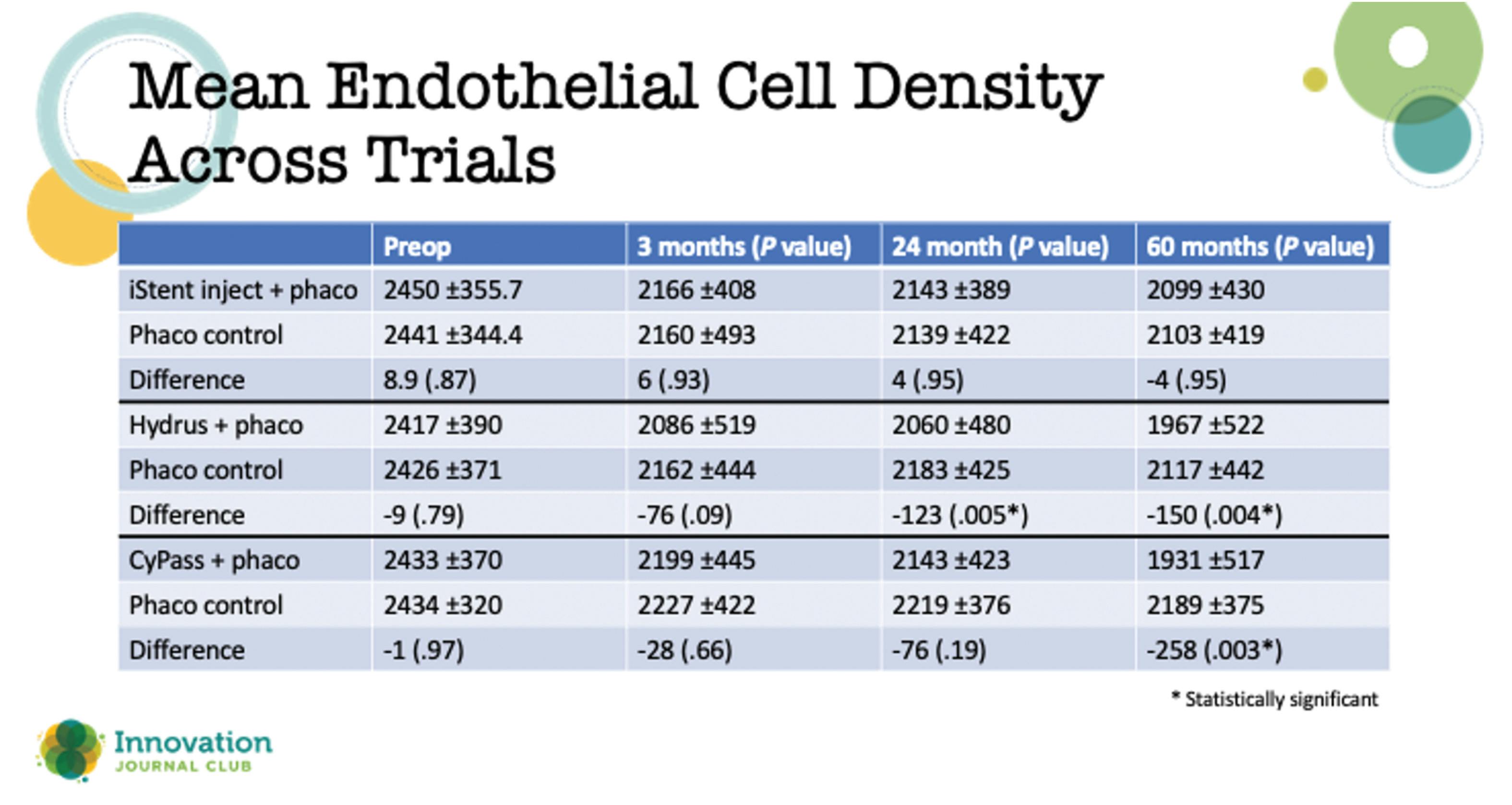
Figure 2. The measured mean ECD across all three trials.
Dr. Sheybani summarized his take-home point from this study, which is that currently, he does not use the presence of corneal disease, such as Fuch dystrophy, as a deciding factor when selecting a MIGS device.
“I'm going to pick the angle procedure that's really going to be best for the patient when you're talking about between the stents and the devices that are currently out there,” he said.
“I think as we learn more, we're going to end up tracking the safety data a little bit better over time, but it does give you confidence, at least now when patients ask or if doctors are concerned that, ‘Hey, look. What's currently out there actually is very safe in this regard,’" Dr. Sheybani concluded.
1. Ahmed IIK, Sheybani A, De Francesco T, et al. Corneal endothelial safety profile in minimally invasive glaucoma surgery. J Cataract Refract Surg. 2024;50(4):369-377.
As the dry eye market continues to expand with novel technology and products, a recent study brings back a new idea and makes it better, according to Dr. Ayres.
In a prospective, multicenter, controlled, double-masked, randomized clinical trial, investigators compared the safety and effectiveness of a crosslinked hyaluronate (HA) canalicular filler (Lacrifill Canalicular Gel; Nordic Pharma) and a hydrogel canalicular plug (Form Fit; Oasis). The study met its primary endpoint in demonstrating that the HA canalicular filler was statistically noninferior to traditional hydrogel plugs in the mean Schirmer score change from baseline (Figure 1).1 Safety data indicated both study cohorts had a similar rate of patients with ≥1 ocular device-related adverse events (Figure 2), and no patients discontinued the study due to an adverse event.1
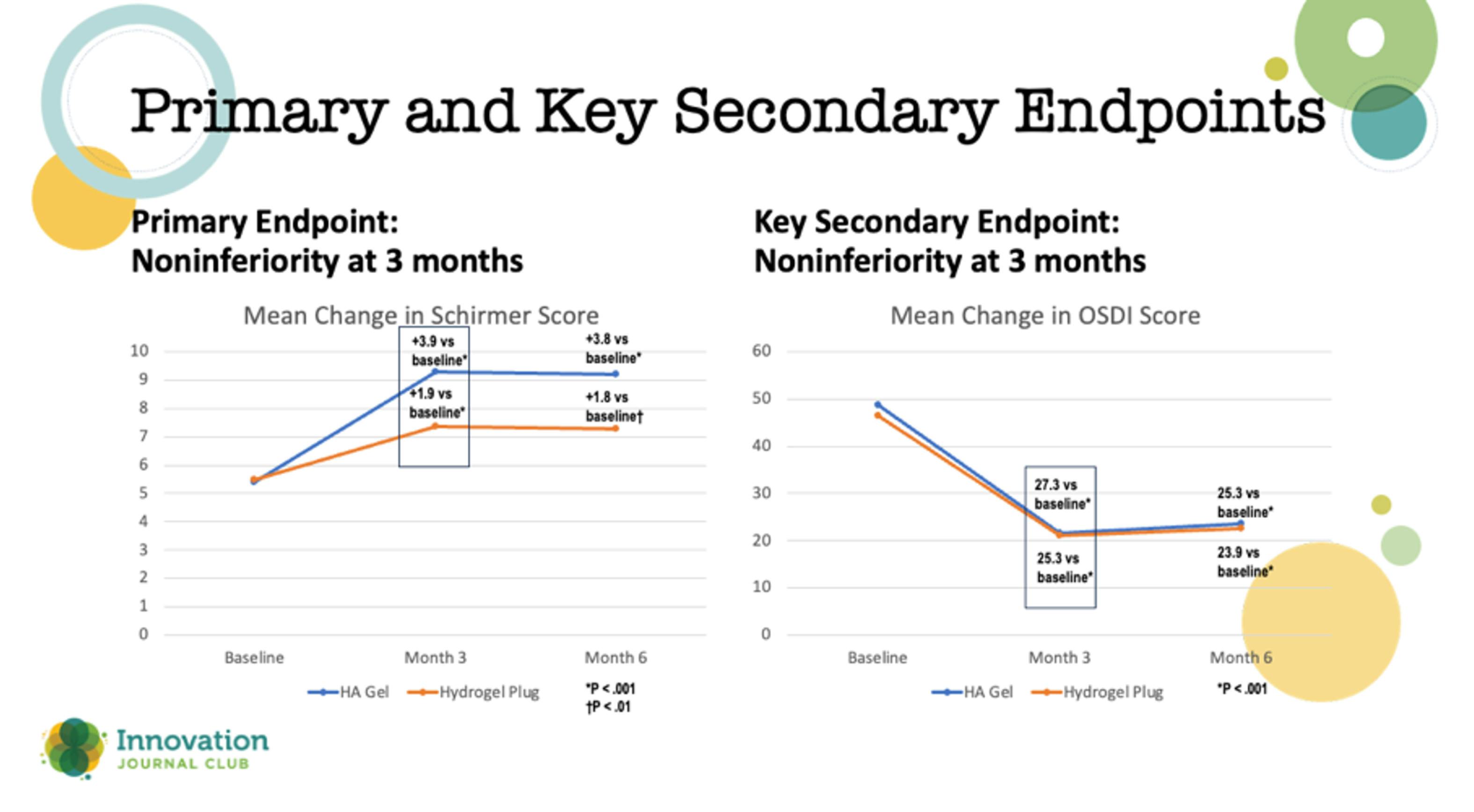
Figure 1. Primary endpoint (left) and key secondary endpoint (right) noninferiority at 3 months following treatment with either crosslinked HA filler or hydrogel plug.
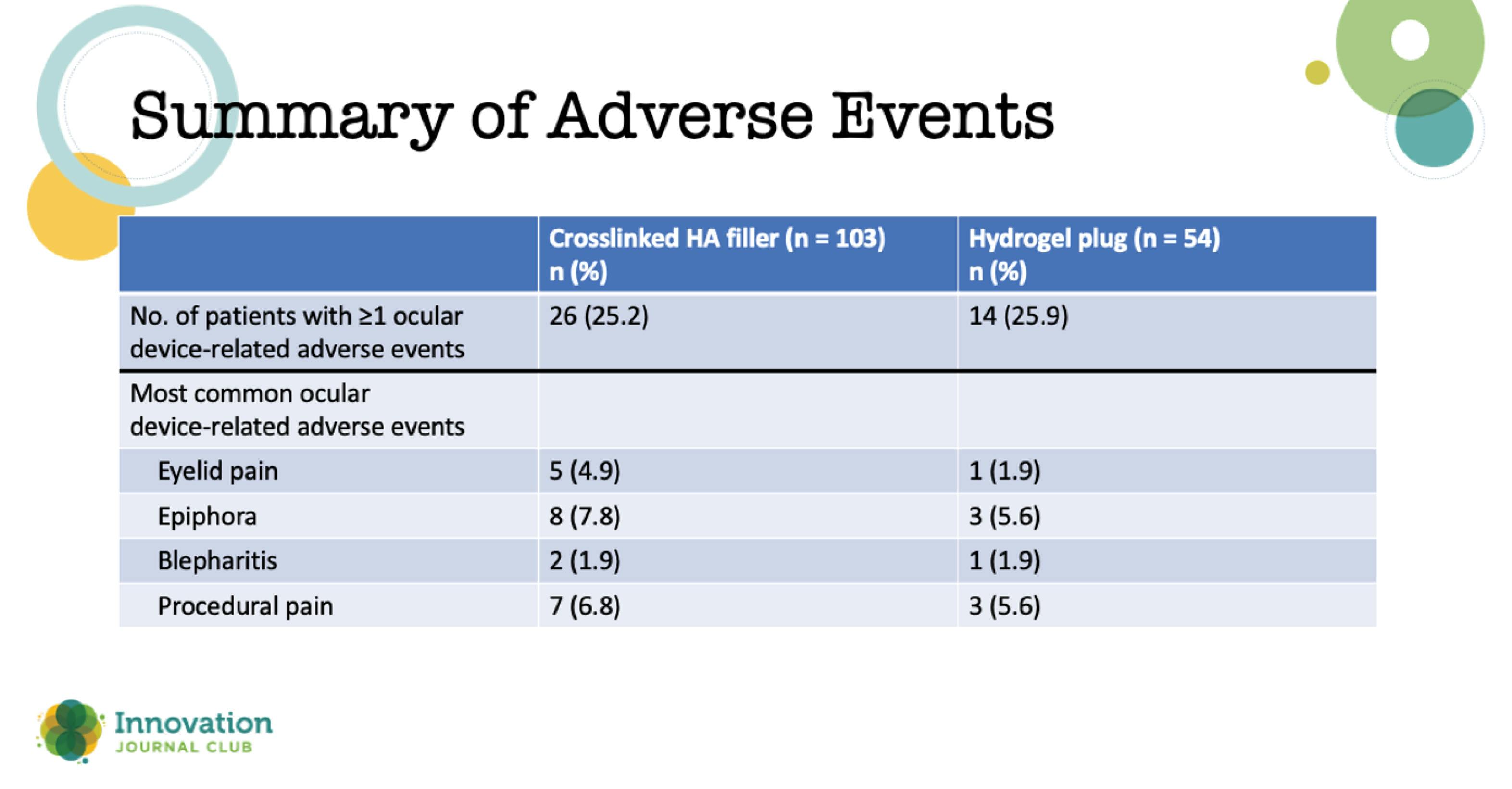
Figure 2. Recorded adverse events among patients using the crosslinked HA filler versus patients using the hydrogel plug.
“[The HA canalicular filler] brings back the interest in interventional dry eye treatments, which we've kind of lost,” explained Dr. Ayres. “This is a much easier concept for patients to understand. It's not as scary and it brings interest back for punctal occlusion.”
One of the key advantages of the HA canalicular gel, according to Dr. Ayres, is that it obviates the need for measuring the punctum and selecting the appropriately sized device—a frequent source of consternation associated with traditional punctal plug devices that may be a deterrent to their use. “With the cross-linked hyaluronic acid gel plug, it's one size fits all,” he said. “It's also one size fits better, because this form fits into the canaliculus. It doesn't just plug; it fills with that soft gel.”
Dr. Ayres said that while the crosslinked HA canalicular filler is a new product, it’s not a new procedure. “Punctal occlusion is probably one of the most beneficial procedures for patients and probably one of the most beneficial procedures for the office,” he said. “It reimburses pretty well [and] it’s really an underutilized procedure.”
Dr. Singh concluded this treatment can be utilized as an additive treatment. “We have all these technologies for ocular surface disease, and it's not this versus that,” he said. “Do your immunomodulators, do your steroids, treat your Demodex, whatever it is. But you can also use this with them. I think they all have a place.”
1. Packer M, Lindstrom R, Thompson V, et al. Effectiveness and safety of a novel crosslinked hyaluronate canalicular gel occlusive device for dry eye. J Cataract Refract Surg. 2024;50(10):1051-1057.
Patient satisfaction and comfort are often key factors when determining the best treatment course, particularly within glaucoma treatment. Dr. Bacharach discussed the importance of a recent survey that evaluated the satisfaction of patients who had received preservative-free latanoprost (PFL; Thea Laboratories) for at least 3 months.
The PFL formulation in the survey, which was conducted in Europe, is known by the brand-name Monoprost. Thea has a similar product sold in the US market as Iyuzeh.
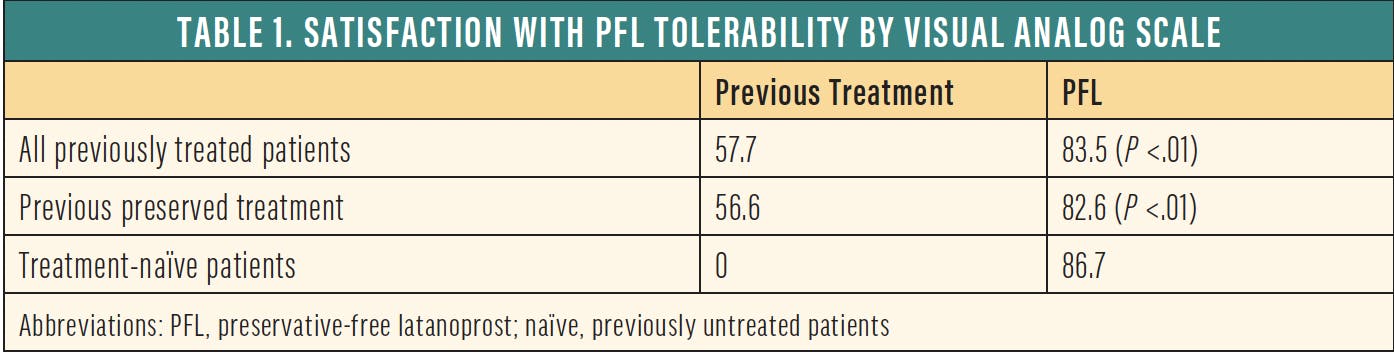
The survey included patients (n = 1872) who were either treatment-naïve before starting PFL or who were previously treated with a different glaucoma drop before being switched to PFL.1 Study investigators used a visual analog score (VAS), which allowed patients to grade from 0 to 100 on how much they like taking the prescribed drop, explained Dr. Bacharach.
According to the study, 95.3% of patients were satisfied (55.2%) or very satisfied (40.1%) with their PFL treatment, and among those who were previously treated, participants were significantly more satisfied with PFL than their previous treatment.1 Results also demonstrated high satisfaction with the tolerability of PFL (Table 1).
“[If patients] like [their topical medication], that means they're probably going to be more persistent, more adherent to the drop[s],” Dr. Bacharach said. “I love the approach [of being comfort-forward], and I try to implement that as best I can in my clinical practice as well as when I'm working with the residents. I see a lot of overutilization of genericized medicines with a [lot] of benzalkonium chloride hitting every eye. And I wonder, ‘Are these patients taking these drops?’ Probably not.”
Reducing benzalkonium chloride load on the eye may have implications beyond compliance. According to Dr. Baharach, there is data in the literature suggesting preoperative exposure to benzaolkonium chloride is a risk factor for earlier surgical failure.2
“When I do some intervention, whether it's a [selective laser trabeculoplasty] or an angle-based MIGS, and I have a preservative-free drop on board, and I can do it with a monotherapeutic alternative, that's such a home run for the patient,” Dr. Bacharach said.
Dr. Bacharach noted that Monoprost is the number one branded prostaglandin in the European pharmacopoeia, so there is already a lot of data available on this treatment.
“I think the proof's in the pudding. It works well,” he concluded. “My clinical success in the office mirrors what we're talking about and what our colleagues in Europe who've had years of success with this drop have experienced. I'm super thrilled to have it available as an option.”
1. Erb C, Stalmans I, Iliev M, et al. Real-world study on patient satisfaction and tolerability after switching to preservative-free latanoprost. Clin Ophthalmol. 2021;15:931-938.
2. Boimer C, Birt CM. Preservative exposure and surgical outcomes in glaucoma patients: The PESO study. J Glaucoma. 2013;22(9):730-735.


_1739967764.png?auto=compress,format)

