

While growing up, I had heard of the incredible work done at Sankara Nethralaya, a nonprofit eye care institution located in my parents’ hometown of Chennai, India. I was therefore elated when I was able to set up a rotation with the organization: I couldn’t wait to learn from a group that provides free eye care to so many patients in need.
After getting connected to the institution’s medical education team through a series of contacts, I was able to set up a 3-week rotation in India. Having told the group of my interest in community ophthalmology, I was set up to work at the community branch. I then received a rotation schedule and contacted my school about the necessary forms. In doing so, I was able to not only get credit for the rotation but also secure funding for the experience.
JASLOK COMMUNITY OPHTHALMIC CENTER
The Jaslok Community Ophthalmic Center at Sankara Nethralaya (Figure 1) provides free services to individuals with a family income of less than $145 USD per month. Each day, hundreds of patients receive care here—when I first walked in, I was amazed by the number of patients in the waiting room.
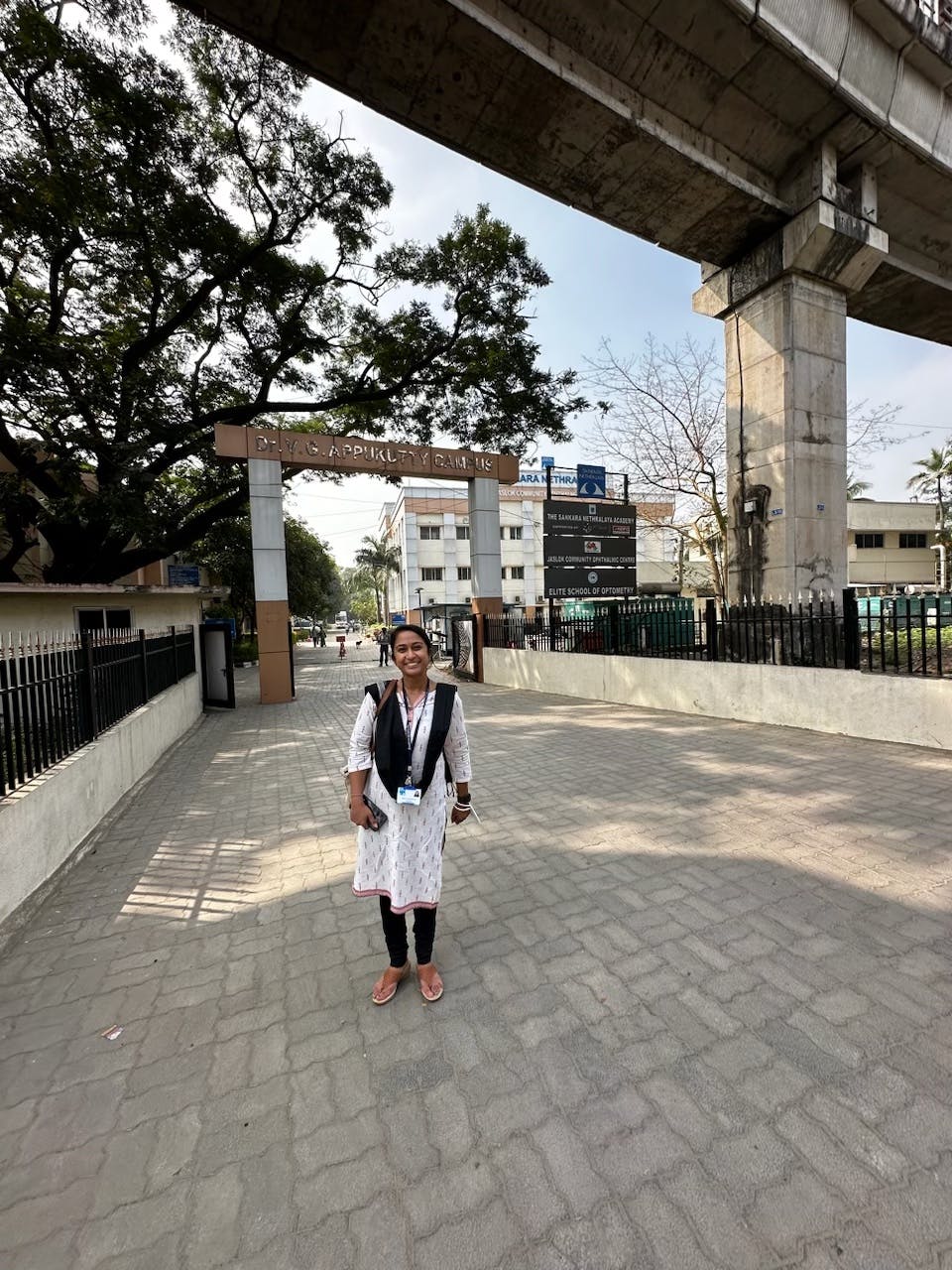
Figure 1. My first day at the Sankara Nethralaya Jaslok Community Ophthalmic Center.
The Jaslok Community Ophthalmic Center has several optometrist suites, specialist suites, and a resident slit-lamp room, where I was set to do my rotation. Patients undergo a refraction in the optometrist suites as needed and then visit the slit-lamp room if their complaint warrants an examination. After the slit-lamp exam, patients requiring dilation are sent to the waiting room and given dilating drops before being seen in the dilated fundus exam room. Dividing up the tasks this way allows the hospital to manage a high volume of patients.
In the slit-lamp room, ophthalmology residents see patients side by side at four adjacent stations. The residents measure IOP with tonometry, perform gonioscopy as needed, and do basic slit-lamp exams. If a patient has a cataract needing operation, the residents also syringe the eyes to ensure patent punctums bilaterally. All patients examined by the residents are also reexamined by the consultants to minimize errors and ensure the best eye care possible.
Initially, my task was mainly to shadow the residents and fellows and learn the patient flow. However, the residents and fellows quickly learned that I had experience with eye exams due to my previous ophthalmology rotation in school, and they permitted me to conduct exams and perform tonometry under supervision. They also taught me the syringing technique and had me assess patients’ punctal patency.
Throughout my time at this center, I saw severe cataracts, infectious keratitis, uveitis, glaucoma, anisocoria, aberrant corneal reflexes, and untreated eye trauma. Overall, I was able to learn a new technique, practice my slit-lamp exams, and see a lot of interesting patient pathology.
ELITE SCHOOL OF OPTOMETRY
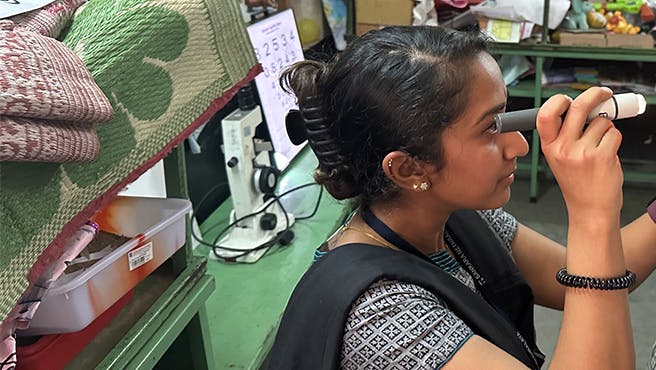
The Elite School of Optometry (ESO) is the renowned optometry school within Sankara Nethralaya. ESO students have the opportunity to hone their skills at vision screening camps, which typically occur daily and concurrently at several schools. Teams of five or six optometry students, master’s students, and optometrists travel to rural schools and screen 500 to 2,000 students per day.
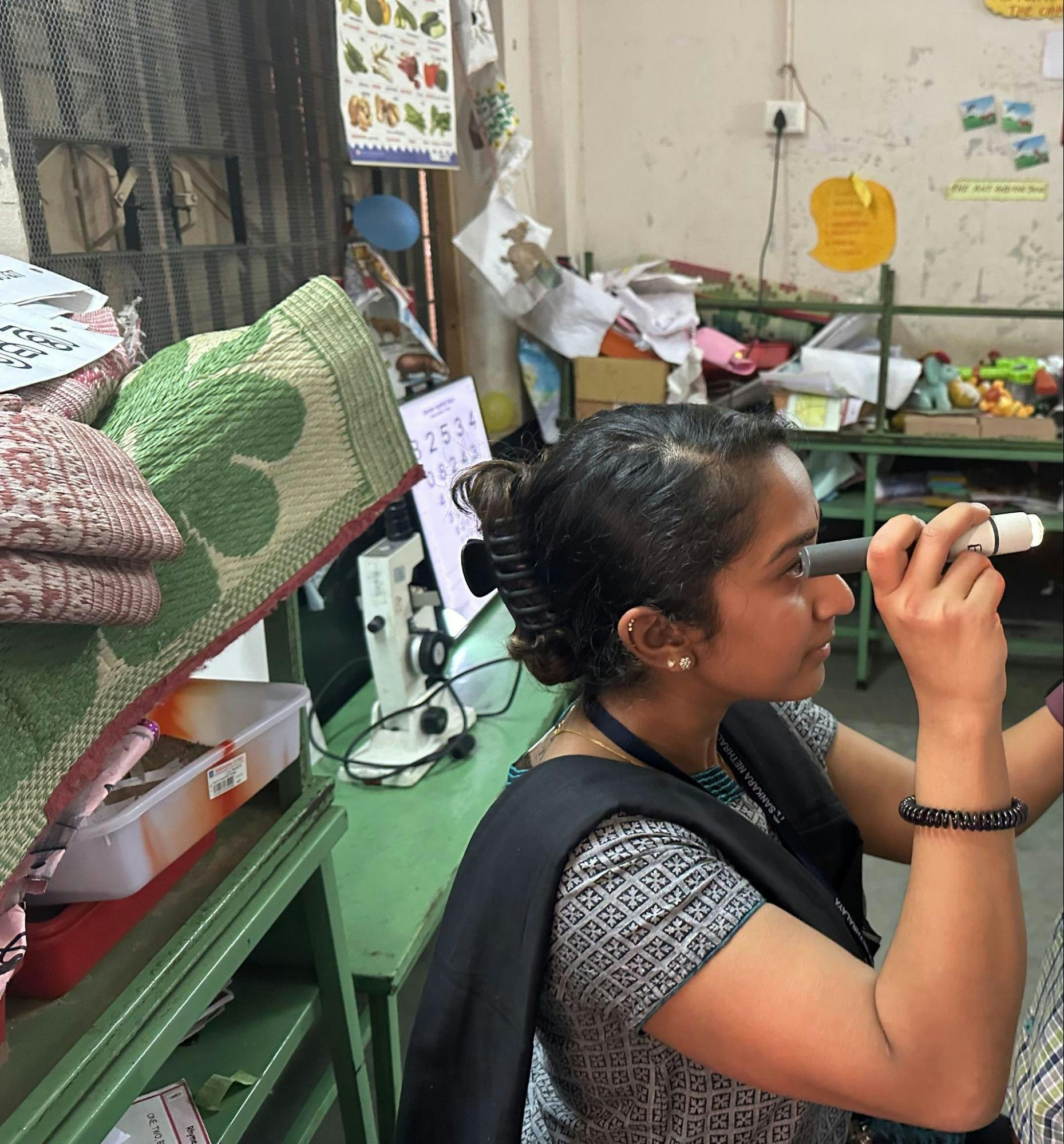
Figure 2. At the vision screening camp at a rural primary school in Ezhil Nagar, I helped run the torch light station, where we checked kids’ lids and lashes for lesions and signs of infection.
I was fortunate to join a screening camp at a school in the Ezhil Nagar neighborhood (Figures 2 and 3). Prior to the trip, I went through training to learn the official ESO specific screening protocols for vision exams, torch light exams, color vision screening, and cover-uncover testing. On the day of the screening, suitcases containing supplies, a laptop for data entry, and a large Snellen chart were loaded into cars.
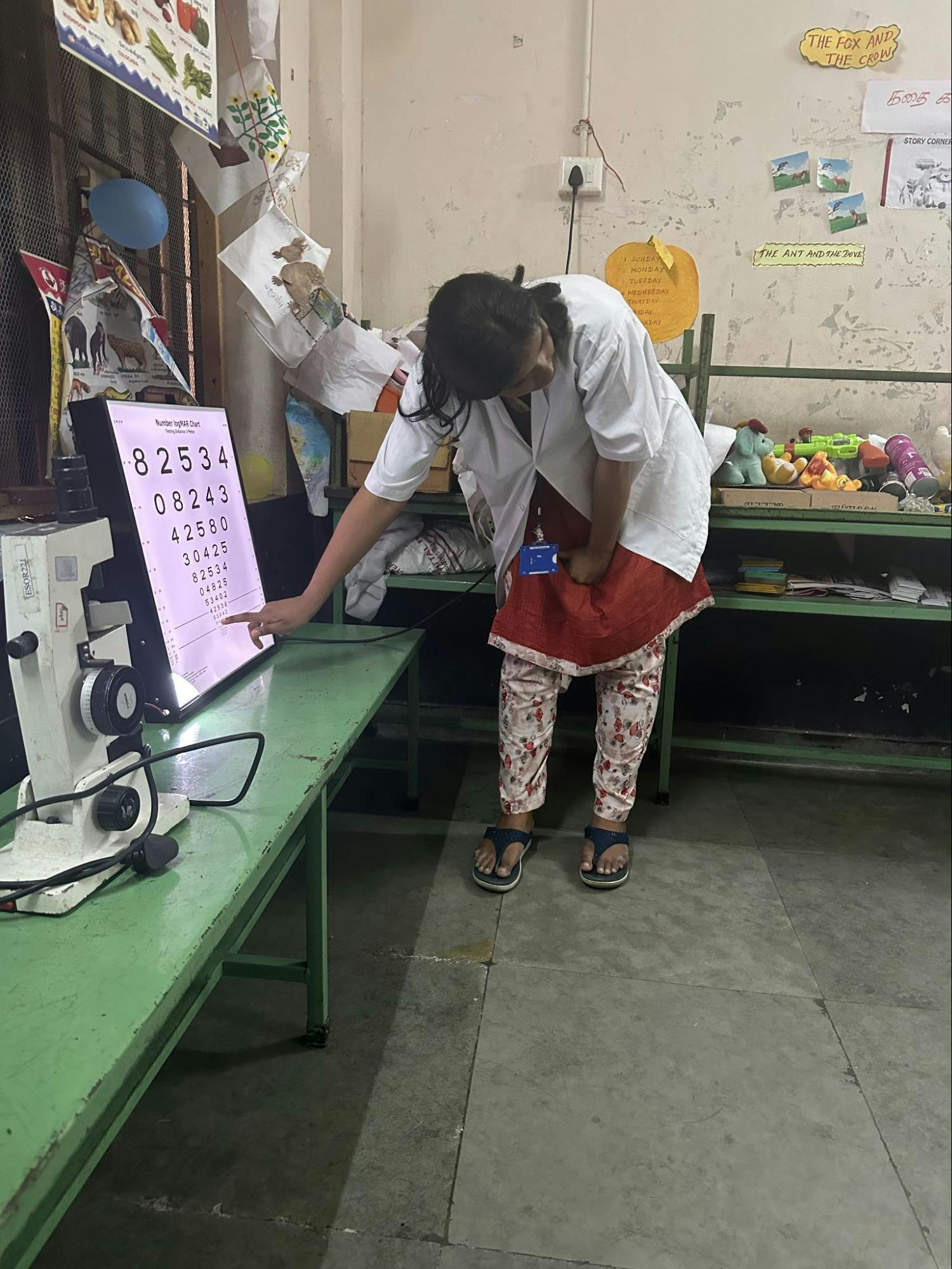
Figure 3. At the vision screening camp at a rural primary school in Ezhil Nagar, one of the optometry students helped run the phase 2 vision screening to fit children with trial frames.
On site, we were guided to a classroom to use for the vision screenings, which two older school students volunteered to help us conduct. If a student passed the screening, they were sent to another station for the torch light exam and cover-uncover testing; if they failed the screening, they were sent to phase 2, which entailed a more thorough assessment with trial frame refraction. I had the opportunity to participate in the vision screening, torch light exams, and cover-uncover examinations.
It was amazing to help with the camp and witness how efficiently the optometry students screened hundreds of local students. These individuals were so excited we were there, and those who were fitted for glasses were amazed when the lenses helped them read. Seeing how much of a difference this program can make for a young child was inspiring. When we left, the kids ran up to hug us and say goodbye—a moment I will never forget.
Upon returning from the camp, I learned about all the data entry that is done for each screening camp. ESO logs all the students who were screened, who had abnormalities on any exam, and who received frames—meaning that, every day, thousands of students are logged. With all these data, and data from follow-up visits, ESO can track how effective their interventions are, allowing them to continue to refine and improve their practices.
LESSONS AND TAKEAWAYS
I am grateful to have rotated at Sankara Nethralaya. Not only was I able to hone my eye exam skills, but I was also able to learn about large-scale eye screening processes from start to finish. As someone with a desire to pursue global ophthalmology, this was a great stepping stone for me to learn more about the field and to see the inner workings of a complex health system with a big impact.
Author’s note: A huge thank you to Dr. Sankar Niranjan, Seshu Badrinath, Dr. Sahana Vaidya, Dr. Smita Praveen, Ms. C.G. Sreedevi, Dr. Veena Bhaskaran, and Dr. Anuradha Narayanan for helping to make this experience possible.