

December 2023
Marisa Schoen, MD; Julia Shatten, MD, MEd; Michael Murri, MD; Stephanie P. Chen, MD; Lorena A. Montalvo-Toledo, MD; and Nicole Fram, MD
YoungMD Connect exists to give young and aspiring ophthalmologists access to mentorship, community, and professional education. This year, YMDC hosted a series of dinner programs in which cornea fellows presented clinical cases to their peers and mentors, who then judged the cases on their difficulty and outcomes. The educational opportunity was made possible with independent support from Dompé. Here, we present summaries of the winning cases.
Reconstruction of the anterior segment employing various surgical techniques and implants.
A 48-year-old man presented for artificial iris (AI) evaluation in the left eye. He had a history of penetrating keratoplasty (PKP) in both eyes for keratoconus. Six months prior to this visit, he was hit with a baseball, which resulted in dehiscence of the graft and loss of native iris and lens of the left eye. He underwent ruptured globe repair and was left aphakic and aniridic. Postoperatively, he reported severe vision loss, glare, and photophobia.
On examination, the patient’s UCVA of the left eye was count fingers at face, and pinhole 20/40; IOP measured 18 mm Hg. No relative afferent pupillary defect was detected, and confrontational visual fields were full for both eyes. External examination showed a left sensory exotropia (Figure 1). Slit-lamp examination revealed an eccentric PKP with graft failure, corneal edema, significant scarring, complete aniridia, and aphakia. Fundus examination was normal. The patient elected to proceed with treatment in the form of AI implantation/IOL implantation and PKP.
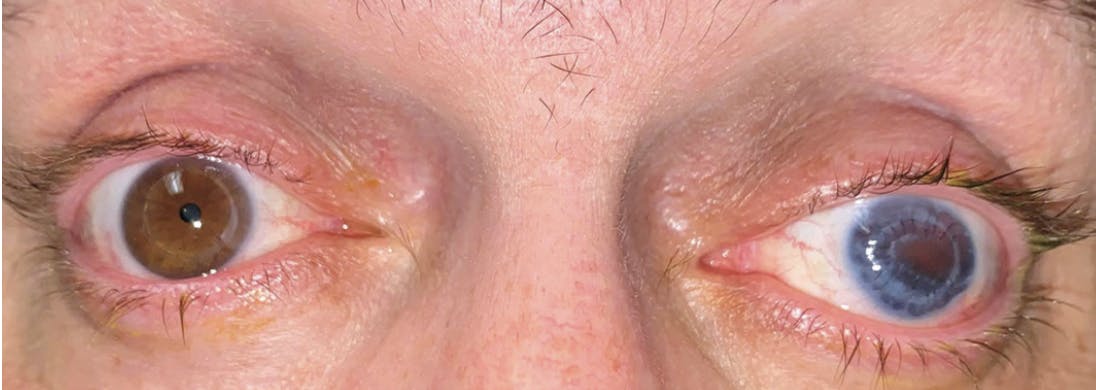
Figure 1. Preoperative photograph shows left exotropia, corneal scarring, complete aniridia, and aphakia of the left eye.
Intraoperatively, the fiber-containing AI implant (CustomFlex ArtificialIris; HumanOptics) was trephined to 11 mm. A single-piece polymethyl methacrylate IOL (CZ70BD; Alcon) was fixated to the posterior aspect of the artificial iris with a 9-0 polypropylene suture (Prolene; J&J MedTech). Polytetrafluoroethylene suture (Gore-Tex; Gore Medical) was threaded through the artificial iris in a horizontal mattress fashion 180° apart. A 9.5-mm scleral tunnel was created superiorly and sclerotomies were fashioned nasally and temporally. The Gore-Tex sutures were retrieved through the sclerotomies using 25-gauge MST forceps. The AI-IOL complex was inserted into the posterior chamber, and the wound was sutured. The Gore-Tex was tied, and knots were buried within the sclerotomies. The donor cornea was manually trephined to 8.75 mm, and the recipient cornea was trephined to 8.25 mm. The diseased cornea was removed and the donor tissue was sutured with 17 interrupted 10-0 nylon sutures.
At 5 months postoperatively, UCVA was 20/150, pinhole 20/40, and IOP was 12 mm Hg. The cornea was clear, and the AI-IOL complex was well-centered. Importantly, the patient’s glare, photophobia, and sensory exotropia were markedly improved. (Figure 2).
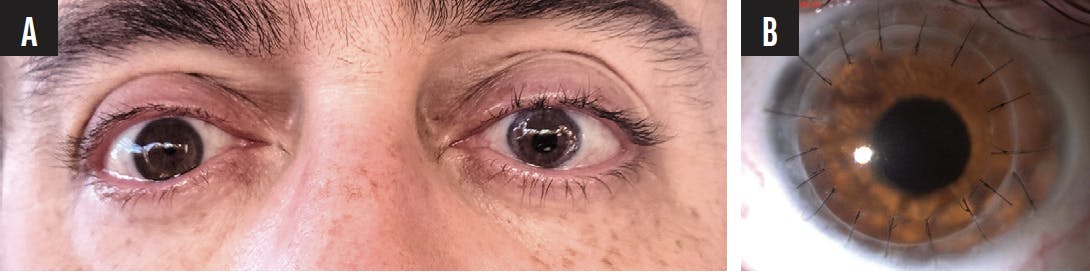
Figure 2. Postoperative photographs show resolution of the exotropia and a well-centered artificial iris in the left eye that was custom-made to match the patient’s native iris tissue in the right eye (A). Postoperative slit-lamp photo of the PKP, AI, and IOL in the left eye (B).
The CustomFlex ArtificialIris was FDA-approved in 2018 for the treatment of large iris defects resulting from congenital aniridia, acquired defects, or other conditions associated with aniridia. A common cause of acquired iris defect is trauma; it is often associated with other sequelae such as aphakia and corneal scarring. A prospective case series that examined clinical outcomes of AI and IOL implantation combined with PKP found that the triple procedure resulted in improved corrected distance VA, cosmesis, and quality of life.1 Nevertheless, various postoperative complications were noted, the most common being iritis, secondary graft failure, and elevated IOP.
With careful preoperative planning, combining PKP with AI and secondary IOL implantation can be an effective technique for visual and cosmetic rehabilitation in patients with corneal pathology, aniridia, and aphakia. Patients must be monitored closely postoperatively owing to an increased risk of postoperative complications that may require medical or surgical intervention.
1. Bonnet C, Vazirnia P, Deng SX, Aldave AJ, Miller KM. Sutured Custom Foldable Silicone Artificial Iris Implantation Combined With Intraocular Lens Implantation and Penetrating Keratoplasty: Safety and Efficacy Outcomes. Cornea. 2021;40(10):1236-1247.
Addressing the complexities of cranial dysinnervation disorder.
A 21-month-old girl with congenital cranial dysinnervation disorder—an umbrella diagnosis that includes Moebius syndrome, congenital hypotonia with severe ptosis, bilateral tonic pupils, and congenital fibrosis—presented with symmetric abduction deficit, ophthalmoplegia, exotropia, and a chin-up position owing to ptosis. At the time of her birth, a gastronomy tube was placed because of inadequate feeding. A genetic consult revealed a benign duplication, but no abnormalities to explain the full medical picture.
A dense white stromal opacity in the right eye was attributed to exposure and treated with lubrication. A visual evoked potential test showed reduced visual acuity, and the patient underwent bilateral frontalis sling procedures to prevent amblyopia. She did well postoperatively and had good lid elevation and no closure during sleep.
Five months later, the girl’s parents noticed that she was rubbing her eyes, and they saw a glob of mucus on the surface of the right eye. They brought her to the emergency department, where the examination was significant for mild injection, mucus, and a 4 mm x 4 mm outpouching of the cornea. The eye was soft and Seidel negative, and the chamber appeared shallow but formed. The patient was given topical antibiotics, and a tape tarsorrhaphy was performed in preparation for definitive repair in the operating room.
In the OR, examination under anesthesia revealed a hypotonous right eye with conjunctival injection, a 5 mm x 6 mm paracentral protuberant area of the cornea with thin spots, mild haze surrounding the lesion, and an otherwise clear cornea (Figure 1). The chamber was shallow. Other findings included a 3-mm pupil, an atrophic iris with visible vessels, and a clear lens. Anterior segment OCT revealed highly cystic corneal tissue with large intrastromal fluid cystic cavities throughout and up to the epithelium.
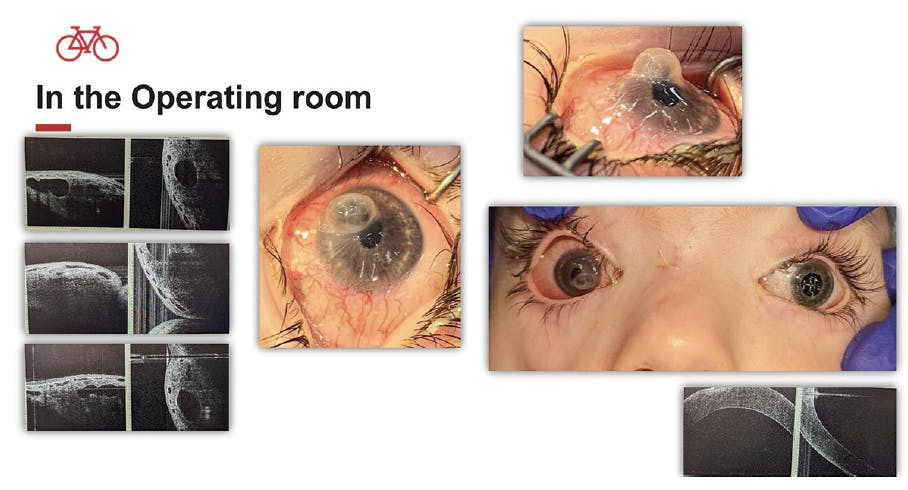
Figure 1. Examination under anesthesia revealed a hypotonous eye, paracentral protuberance of the cornea with visibly thin areas and mild haze, shallow chamber, 3-mm pupil, atrophic-appearing iris with visible vessels, and clear lens. Anterior segment OCT showed highly cystic corneal tissue with large intrastromal fluid cystic cavities throughout.
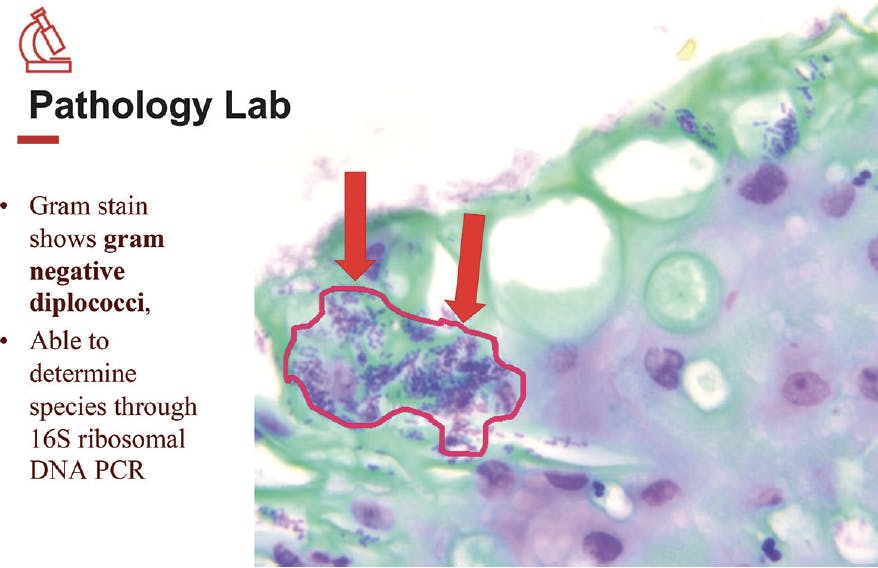
Figure 2. Pathology identified a large central defect. Peripherally and paracentrally, the endothelium was mildly attenuated in some areas with foci of discontinuity. The corneal stroma exhibited widespread scarring, fibrosis, areas of necrosis, and a severe mixed inflammatory infiltrate. The Bowman layer is present only in the peripheral cornea. The corneal epithelium was edematous, disorganized, widely variable in thickness, and contained microcystic bullae. Adherent iris tissue showed congested blood vessels.
A therapeutic penetrating keratoplasty was performed. A 7.75-mm corneal graft was decentered to the limbus inferonasally. The corneal button had extensive iris incarceration into the lesion and was firmly incorporated within the cystic stromal degeneration of the cornea. Synechiae were broken, and the firmly adhered iris was excised. A conjunctival resection was performed where graft went to limbus. A partial, temporary tarsorrhaphy was performed to prevent exposure and encourage healing.
The corneal button was submitted in formalin to Eye Pathology, where H&E-, GMS-, Gram-, and PAS-stained slides were examined. Pathology revealed a large central defect where the endothelium, Descemet membrane, stromal tissue, and Bowman layer were largely absent. The corneal stroma exhibited widespread scarring, fibrosis, areas of necrosis, and a severe mixed inflammatory infiltrate comprised primarily of neutrophils and lymphocytes. The corneal epithelium was edematous, disorganized, widely variable in thickness, and contained microcystic bullae. Adherent iris tissue showed congested blood vessels.
Gram staining showed gram-negative diplococci. Given the quiet presentation and the hypothesis of exposure keratopathy as the cause, microbiology was not sent at the time of surgery. Fortunately, we were able to send the formilin-fixed specimen for 16S ribosomal DNA PCR processing. The gram-negative diplococci was speciated to Moraxella nonliquifaciens. The patient was already being treated with ofloxacin, which has good efficacy against Moraxella, so that therapy was continued.
This case presented several learning opportunities. First, be cautious when repairing ptosis in patients with ophthalmoplegia. Second, send cultures to pathology even if infection is not high on the differential, because Moraxella and many other infections can be present without an obvious infiltrate; however, if microbiology was not sent during surgery, speciation can be determined with DNA PCR of a formalin-preserved pathology specimen. Finally, hypotony can be induced from confluent bullae, and therapeutic keratoplasty is an effective treatment.
Acknowledgments: Evan Warner, MD; Sarah Nehls, MD; Yasmin Bradfield, MD; Breanna Aldred, MD; Katherine Dalzotto, MD; Heather Potter, MD; Nikki Duncan, MD; and Regis Kowalski, MS.
A case of retained SMILE lenticule in an aircraft pilot.
A 31-year-old man presented to our clinic to discuss refractive surgery to correct his myopia in order to pass aviation screenings for the U.S. Air Force Academy. He had a 15-year history of contact lens wear and no known history of ocular infections or trauma. His medical history was negative for collagen vascular diseases, obstructive sleep apnea, allergies, and eye rubbing. His family history was negative for complications with refractive surgery or ectasia.
Upon examination, the patient’s BCVA was 20/20 OU. Pupils were reactive from 4 mm to 2 mm bilaterally with no relative afferent pupillary defects detected. IOPs were 14 mm Hg and 13 mm Hg. Confrontation visual fields were within normal limits.
The patient’s spectacles prescription was:
OD: –5.75 –0.75 x 90
OS: –5.50 –0.25 x 115
Manifest refraction:
OD: –6.00 –0.50 x 85
OS: –5.75 –0.25 x 180
Cycloplegic refraction:
OD: –6.25 –0.25 x 80
OS: –6.00 –0.25 x 175
Pachymetry showed thin corneas (518 µm OD; 524 µm OS). Keratometry readings were approximately 41 for each eye with less than a half diopter of cylinder.
After discussing several surgery options—PRK, LASIK, SMILE, and ICL—the patient chose SMILE.
The patient was taken to the laser suite, and the VisuMax femtosecond laser (Carl Zeiss Meditec) was used to create the SMILE lenticule and incision. The lenticule was dissected and removed from the right eye without complication. When attempting to dock the left eye, an irregularity was noted in the patient interface (Figure 1). The patient interface was cleaned with a Weck cell and was redocked. During creation of the lenticule in the left eye, a slight irregularity was noted in the lenticule cut at the same inferonasal area where the patient interface irregularity had been previously. When attempting to dissect the posterior aspect of the lenticule, the surgeon found that the inferonasal area was not free. The decision was made to try to circumferentially tear the lenticule, which resulted in removal of about 85% of the lenticule. The 15% of retained lenticule was crescent-shaped inferonasally and could not be removed from the eye. At this point, the eye was irrigated and the surgery was concluded.
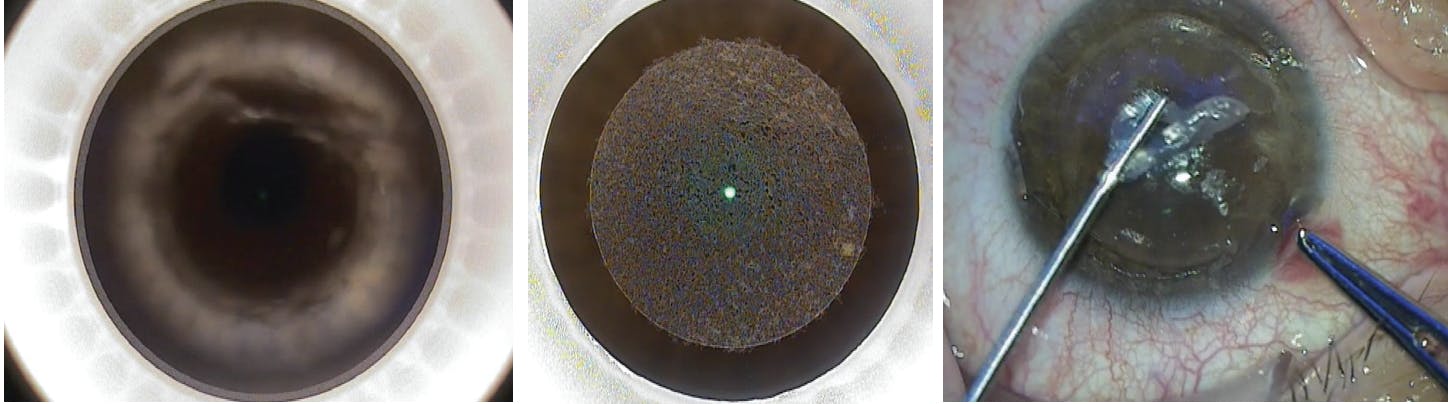
Figure 1. Intraoperative patient interface abnormality and irregular lenticule creation.
On postoperative day 2, an attempt was made to remove the retained portion of the lenticule. Because the surgeon was unable to dissect to the posterior plane, a false plane was created, and once this was realized, the decision was made to abort the attempted dissection.
At the 1-month postoperative visit, manifest refraction in the left eye was +0.75 –1.00 x 83. Slit-lamp examination of the left eye revealed significant stromal irregularity and scarring from 5 o’clock to 8 o’clock (Figure 2).
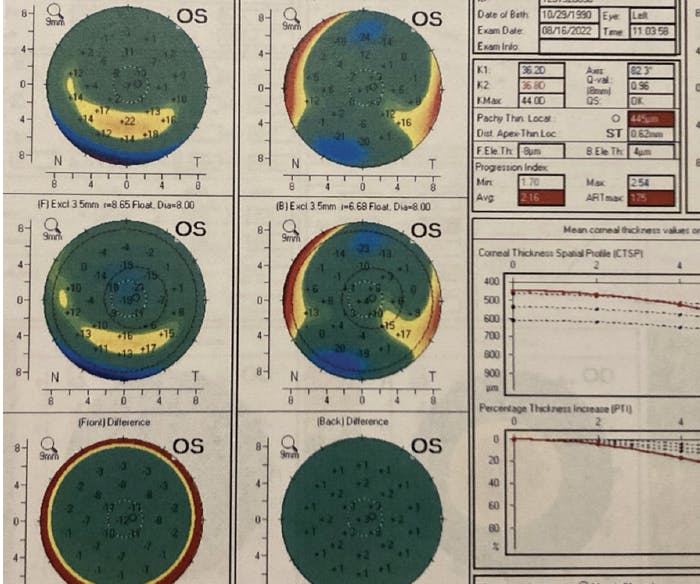
Figure 2. Pentacam of left eye at postoperative month 1.
At postoperative month 6, the patient’s visual acuity was 20/15 OU, and he went on to pass his aviation examination.
This case demonstrates several learning points. First, while SMILE complications such as a partially retained lenticule are rare, they are important to discuss with patients preoperatively. This patient was fortunate to not have symptomatic complaints after surgery, but he could have needed further intervention, such as topography-guided PRK or further dissection of the partial lenticule.
Second, any irregularity of the patient interface is important to note during LASIK and is even more vital to note during SMILE, because of the precision of lenticule creation. In hindsight, this patient could have benefited from an exchange of the patient interface, and we would recommend, “When in doubt, switch it out.”
Finally, more intervention is not always better. As an experienced surgeon advised, when having a complication, “Don’t just do something. Stand there!” In this case “standing there” and deciding to employ watchful waiting yielded the desired result for this patient, who is highly reliant on excellent vision.
A team effort restores functional vision in a monocular patient.
This 82-year-old man has a history of severe ocular cicatricial pemphigoid (OCP) treated with mycophenolate mofetil. Despite systemic immunosuppression, his right eye worsened and ultimately underwent evisceration owing to corneal perforation and choroidal hemorrhage.
After 5 years of quiescence, the ocular surface of the left eye began to decompensate secondary to limbal stem cell deficiency (LSCD). Attempts to rehabilitate the cornea with tarsorrhaphies failed, as nonhealing epithelial defects and corneal ulcers recurred each time the lids were opened. Visual acuity had declined to light perception with significant functional and cognitive impairment in this previously high-functioning patient.
Considering the patient’s LSCD and ocular surface dryness from the underlying disease, a penetrating keratoplasty or Boston Type 1 keratoprosthesis (KPro) were deemed not likely to succeed. The decision was made to implant a Boston Type 2 KPro (Figure 1, right) as a combined case with our retina and oculoplastic colleagues for the vitrectomy and complete tarsorrhaphy.
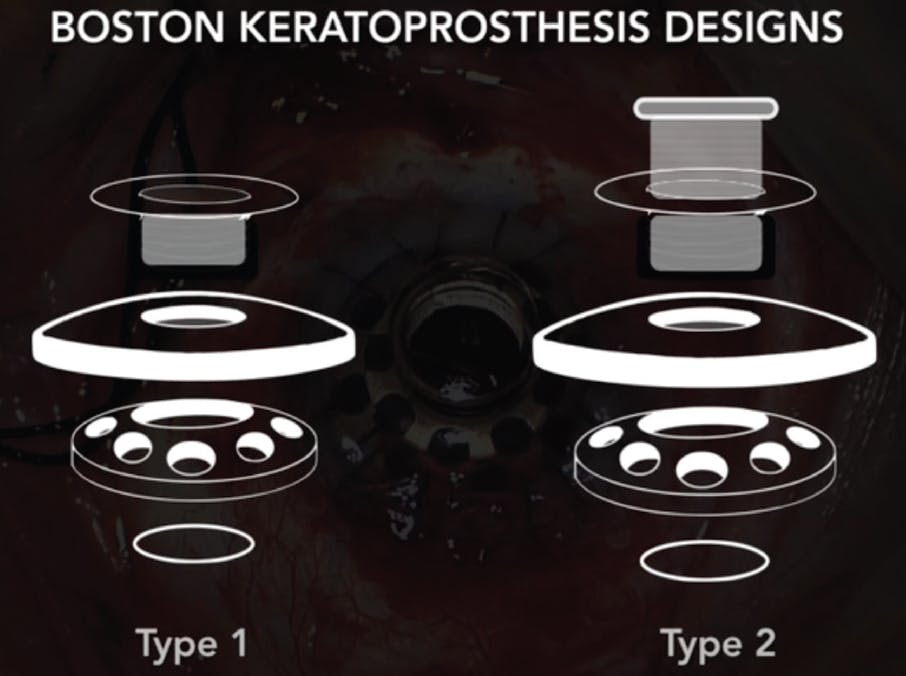
Figure 1. Schematic of the Boston Type 1 vs. Type 2 Keratoprosthesis. Note the elongated optical cylinder in the Type 2 design that traverses the tarsorrhaphy.
Prior to surgery, the patient had a complete tarsorrhaphy in the left eye to protect the ocular surface. After opening the tarsorrhaphy on the day of surgery, we performed a 360° peritomy with removal of pannus tissue, followed by trephination and removal of the opacified cornea. An iridectomy was performed to expand the iris for subsequent open-sky cataract extraction, and a temporary KPro was sutured in place.
The retina surgeon then performed a vitrectomy, including removal of the capsular bag. The temporary KPro was replaced with the Type 2 Boston KPro using a flieringa ring for scleral wall stabilization and fluorescein to ensure a tight seal.
The oculoplastic surgeon then performed a full tarsorrhaphy, first excising all conjunctival mucosal tissue for proper healing. Because device extrusion is a major postoperative concern, botulinum neurotoxin was injected to paralyze the rectus muscles, thereby avoiding movements that can lead to extrusion. Finally, the eyelids were sutured fully closed over the optical cylinder.
At the 6-week postoperative visit, the patient was returned to the OR, and the oculoplastic surgeon fashioned the periocular skin opening for the optical cylinder to protrude. At 4 months postoperatively, the skin around the cylinder had healed well with no extrusion or skin retraction (Figure 2). The patient’s visual acuity had improved from light perception to J2 (20/30) at near in the left eye. Nine months after surgery, the patient continues to do well, with stable vision and a return to functional activities.
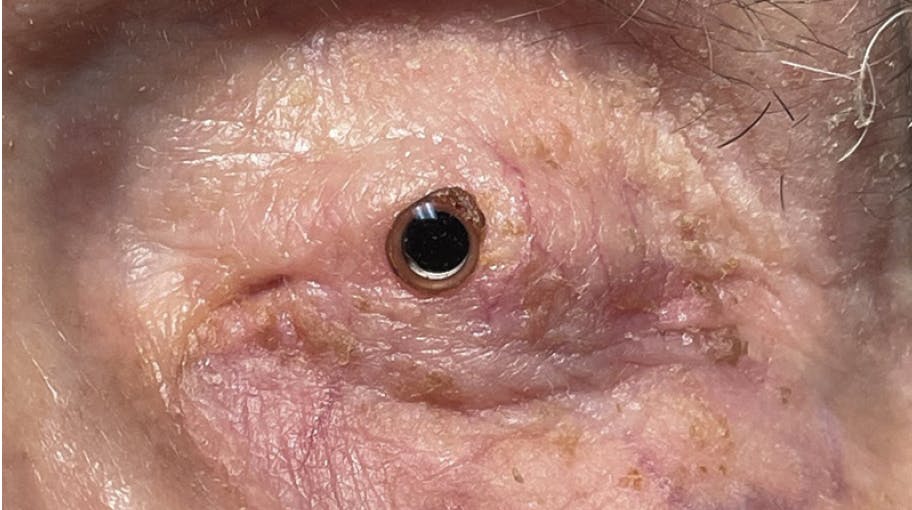
Figure 2. Postoperative month 4 with the Boston Type 2 Keratoprosthesis demonstrating good device retention and no retroprosthetic membrane.
Early diagnosis and prompt control of inflammation are critical for the proper management of OCP/mucous membrane pemphigoid. In general, the Boston Type 2 keratoprosthesis can be considered for patients with severe, end-stage ocular surface disease where penetrating keratoplasty and the Type 1 KPro have poor prognoses. While good visual improvement is possible with KPros, long-term outcomes are tenuous. Retroprosthetic membranes, device extrusion, and glaucoma continue to pose major challenges postoperatively.
One of the keys to success in improving retention is careful attention to lid closure at the time of KPro placement. Employing a complete tarsorrhaphy with full lid closure for 6 weeks postoperatively before creating the optical cylinder window can be considered. Along with careful and continuous postoperative monitoring, we have been able to successfully restore sight to this monocular patient.
Retrocorneal membrane formation in the presence of a glaucoma drainage device.
An 86-year-old man presented to our clinic for evaluation of worsening vision in his right eye. The patient had type 2 diabetes mellitus, paroxysmal atrial fibrillation, hyperlipidemia, and hypertension. He was pseudophakic in both eyes and had a history of primary open-angle glaucoma that was previously treated with maximum medical therapy. He developed bullous keratopathy of the right eye after glaucoma filtering surgery. The patient reported he developed elevated IOPs after an endothelial corneal transplant was performed in the right eye, requiring a second glaucoma surgery, a Xen gel implant (Allergan). These previous ocular surgeries were performed when the patient lived in Florida.
Upon initial examination, the patient’s visual acuity was hand motion in the right eye and 20/50-1 in the left eye. IOPs were 19 mm Hg OD and 15 mm Hg OS. The right eye findings included diffuse corneal edema with extended deep corneal neovascularization from 3 o’clock to 7 o’clock, an atrophic iris with transillumination, and presence of anterior synechiae extending from 2 o’clock to 6 o’clock with a shallow chamber nasally. Examination of the left eye was unremarkable.
The patient was diagnosed with endothelial graft failure and extended anterior synechiae in the right eye. It was decided to perform repeat DSAEK with synechiolysis.
During surgery, it was noted that the failed graft was attached 360° to the iris by fibrotic tissue. In an attempt to remove it, MST retina microforceps and scissors were used to hold the graft and cut the fibrotic membrane adherences to the iris, but this maneuver was unsuccessful. Then, 23-gauge curved retina scissors were used with success to remove the fibrotic membrane adherences attaching the graft to the iris (Figure 1). An Endoserter injector (CorneaGen) was used to deploy tissue into the anterior chamber with caution, owing to significant iris atrophy. The tissue was unfolded and centralized with the help of a Sinskey hook. A 20% SF6 gas bubble was injected under the graft. The full gas bubble could not be maintained despite closing all incisions. Therefore, a 30-gauge needle was used to inject gas into the anterior chamber (Figure 2). A medium-sized gas bubble was held inside the anterior chamber, and IOP was within normal range.
_1702577011.png?auto=compress,format)
Figure 1. The fibrotic membrane adherences attaching the graft to the iris were removed using 23-gauge curved retina scissors.
_1702577024.png?auto=compress,format)
Figure 2. A 30-gauge needle was used to inject gas into the anterior chamber.
Despite a fully attached DSAEK graft post surgery, the patient’s visual acuity remained hand motion. At the 1-month postoperative visit, corneal edema had improved; however, at the 6-week visit, the patient presented with worsening and persistent corneal edema and 360° anterior synechiae. The repeat DSAEK had failed, and significant anterior synechiae developed despite the graft remaining attached in the correct orientation.
The patient plans to move back to Florida where he will continue his eye care.
The most common cause of endothelial graft failure is endothelial cell loss from tissue preparation and surgical stress. In addition, the presence of glaucoma drainage devices and peripheral anterior synechiae (PAS) have been found to increase the likelihood of retrocorneal membrane formation and further PAS formation from the presence of proinflammatory cytokines.1,2 In this case, the presence of a glaucoma filtering surgery before the first endothelial graft placement most likely contributed to the formation of the retrocorneal membrane, which contributed to graft dislocation, adherence to the iris, and subsequent graft failure. We hypothesized that endothelial cell injury from persistent PAS after the re-graft and graft manipulation in surgery contributed to the second DSAEK failure.
In retrospect, an anterior segment image could have provided further information into the extent and severity of the retrocorneal membrane and the PAS causing graft adherence to the iris. A penetrating keratoplasty might have been a better long-term option in such an anterior segment complex case.
1. Shulman J, Kropinak M, Ritterband DC, et al. Failed descemet-stripping automated endothelial keratoplasty grafts: a clinicopathologic analysis. Am J Ophthalmol. 2009;148(5).
2. Naranjo A, Pirakitikulr N, Pelaez D, et al. Clinicopathologic correlations of retrocorneal membranes associated with endothelial corneal graft failure. Am J Ophthalmol. 2021;222:24–33.


